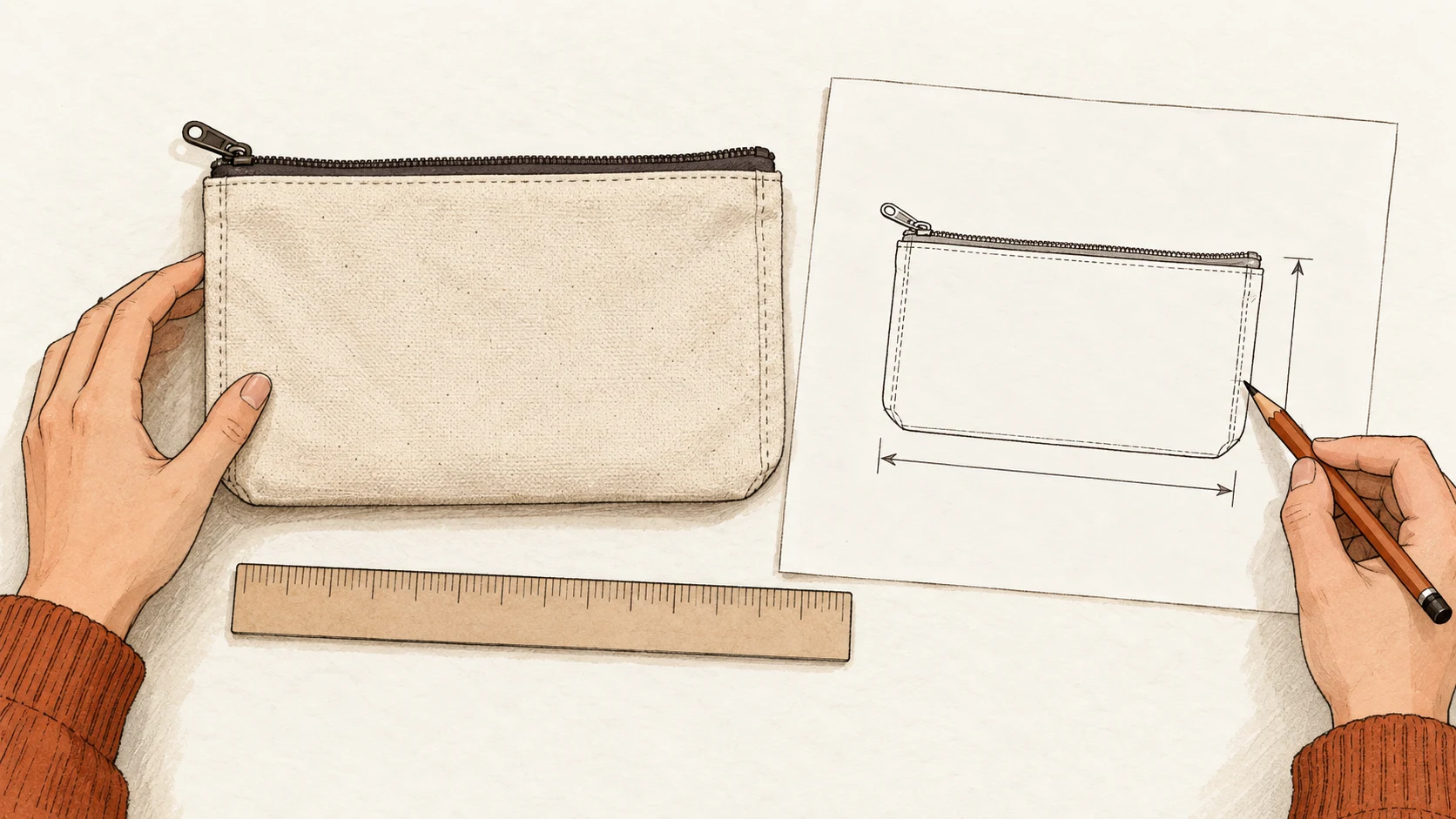
Before you approve a product sample, compare it with the product you actually want to order. Check the dimensions, construction and finish, then record anything that needs changing or still hasn't been checked.
Keep a short record of what you found and what should happen next. The supplier should be able to tell whether you're asking for a revision, waiting for evidence or approving a specific version, without piecing together a week of messages.
Find out what the supplier actually sent
Start by asking whether this sample uses the materials and production method quoted for your order. Have the supplier identify any differences, including unfinished personalisation or temporary packaging.
The word “sample” covers different jobs. QIMA's sample-review service separates development prototypes, fit samples, pre-production samples and samples taken for shipment review. A sample made to check the shape can still leave the final material or finish undecided.
Give the item a reference and save the product brief you're checking it against. Include the supplier's model or product code, the colour or size, and the artwork version where relevant. If you've received several variants, record which ones you reviewed.
If a requirement is missing from the brief, agree it with the supplier before judging that part of the sample.
Work through the product, then its details
Unpack the complete selling unit and keep the contents together. Work through the checks that apply to your product, writing down the result while it's in front of you.
| Check | What to record |
|---|---|
| Contents | The product and accessories received, compared with the agreed list. Identify anything missing. |
| Dimensions and fit | The measurement, unit and measuring points. Check parts that need to fit together using the agreed method. |
| Construction and finish | The location of loose stitching, uneven joins, marks or other differences from the agreed reference. |
| Basic use | What you operated or assembled, how you checked it and what happened. Follow the product's instructions. |
| Packing and labels | What was supplied, what you checked and which parts are still temporary or missing. |
QIMA's inspection-checklist guidance covers these broad areas, with requirements adapted to the product. Your acceptance criteria need to be just as specific. If a measurement can vary, agree the permitted range and measuring method before deciding whether the result passes.
Keep material claims and safety checks separate from appearance. You can't confirm composition or certify safety by looking at an item. Where specialist tests are needed, agree the scope with a competent testing provider and leave those checks open until the evidence has been reviewed.
For the complete pack, use the custom packaging guide. It covers fit, artwork and the packing method in more detail.
Give personalisation its own check
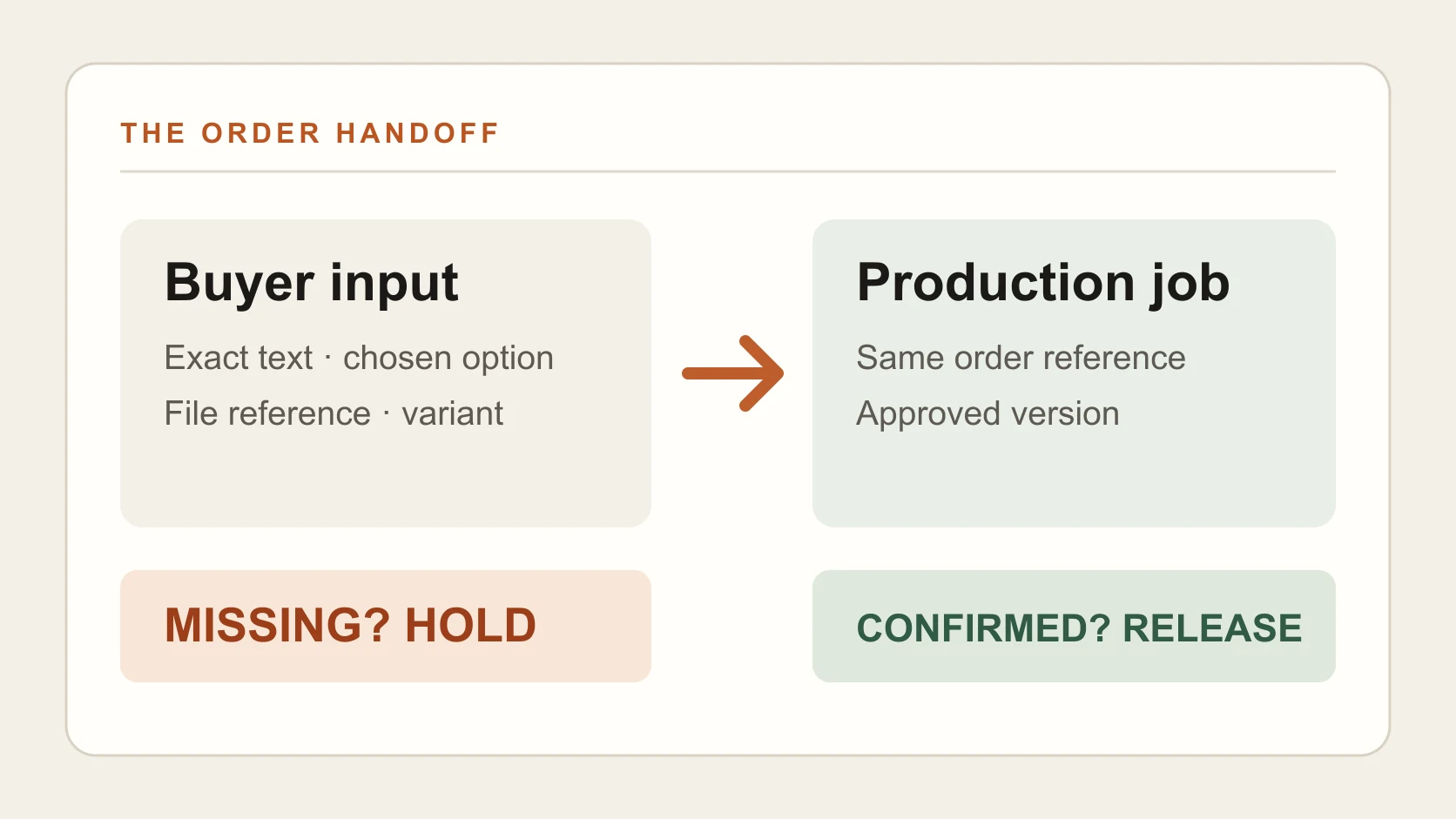
For a personalised product, check the exact text against the request before judging how it looks. Then inspect the placement, spacing and legibility on the finished item.
With embroidery, the artwork goes through another step before it reaches the fabric. Digitisation converts it into instructions for the embroidery machine. Printful explains that small details can be enlarged, changed to a different stitch or removed in that process, and recommends reviewing a sample in thread. Printful's embroidery guidance.
So keep the submitted artwork and the finished result together. If a detail has changed, ask whether the file needs revising or the production needs correcting. Otherwise, another sample may repeat exactly the same result.
If every customer can choose different text, ask your supplier how it handles longer text and which fonts or characters it supports. Agree the limits and placement rules before offering those options in your shop.
Record which options the sample covers. A result for one name or design doesn't settle how all the others will look. Printful's production rules apply to its service; another supplier needs to confirm its own.
Take photos the supplier can act on
A close-up shows the detail. A wider image tells the supplier where that detail is on the product. Keep both, using the same sample reference.
For a size or placement issue, include the measuring tool and show the agreed start and end points. Printful's own problem-photo instructions distinguish whole-item views, well-lit detail images and measurement photos. That is a useful approach for your sample notes too.
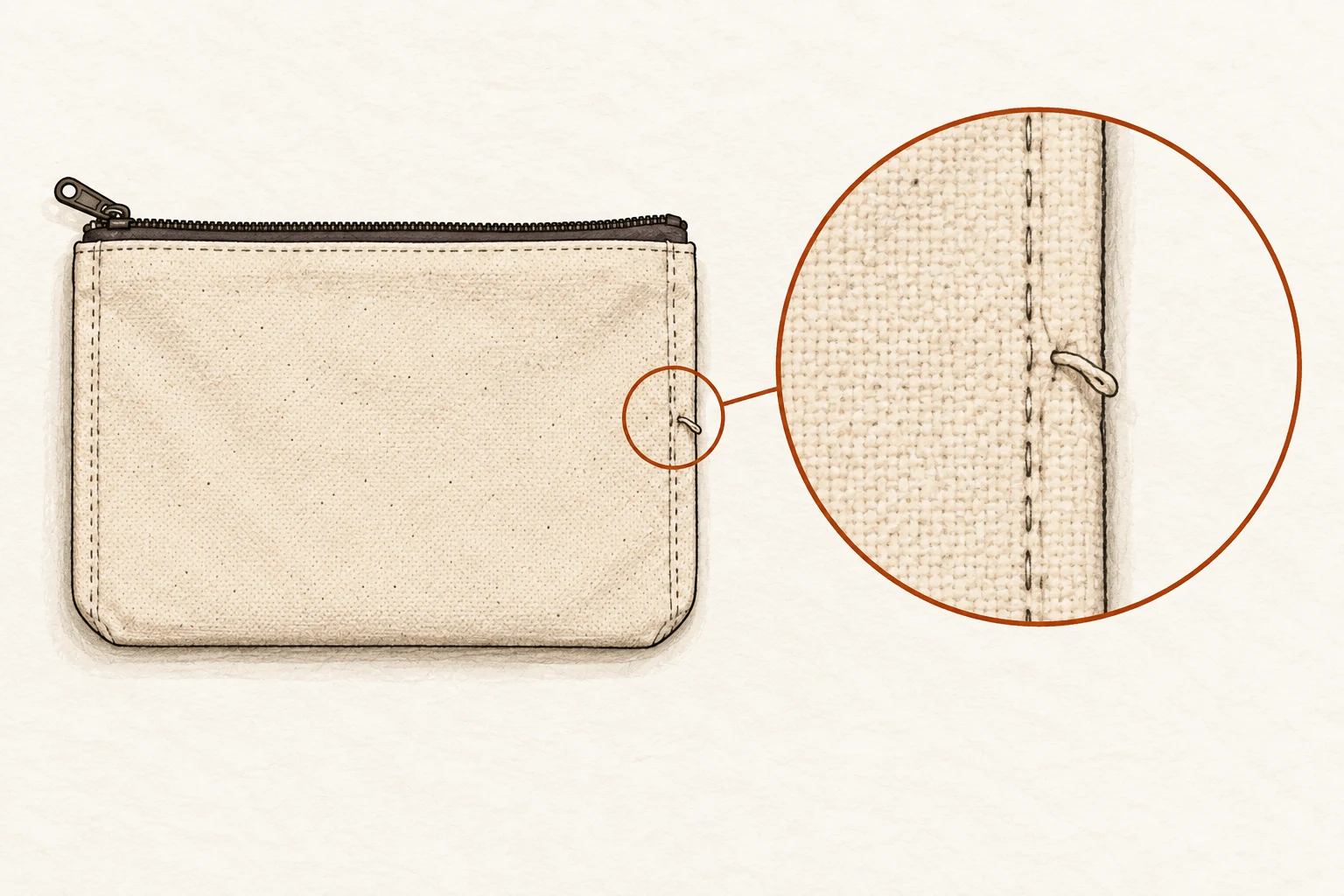
Number each finding and put that number in the photo filenames. Describe the difference from the requirement beside the image. If the issue happens when a part moves, a short video can show what a still photo misses.
Leave the original files intact. Annotated copies can point to the issue without losing the unmarked evidence.
Keep one review record for each sample
Copy this record and repeat the check section for each requirement. You can also use the printable sample-review sheet.
Use these statuses consistently:
- Passed: you've checked the requirement and recorded evidence that it was met.
- Change needed: you've found a difference that needs resolving.
- Not checked: the check hasn't happened or the evidence isn't sufficient to decide.
Mark unanswered checks explicitly. That makes them harder to overlook when you're ready to place the order.
Tick each detail once you have confirmed it. Copy the blank record to save your answers.
An item passing one check doesn't approve the entire product. Use the decision section to state what the supplier can do next, including whether production is still on hold.
Send the findings with a clear next action
If the sample needs work, send the findings as one numbered list. Ask the supplier to reply against each item, so an answer about the finish doesn't quietly leave the dimensions unresolved.
When the remaining checks are resolved, identify the approved sample and the specification that goes with it. Keep the physical reference where practical, record who holds it and make the same version available to anyone inspecting production. QIMA also uses reference samples for comparison.
Later production still needs its own checks. SGS describes pre-shipment inspection as reviewing the shipment's quality, quantity, markings and packing against requirements. Reviewing the sample on your desk doesn't establish that a future batch will match it.
Agree who will check production, what they'll compare it with and which findings require your decision before the next stage. Save those instructions with the sample record and the rest of your supplier order documents.