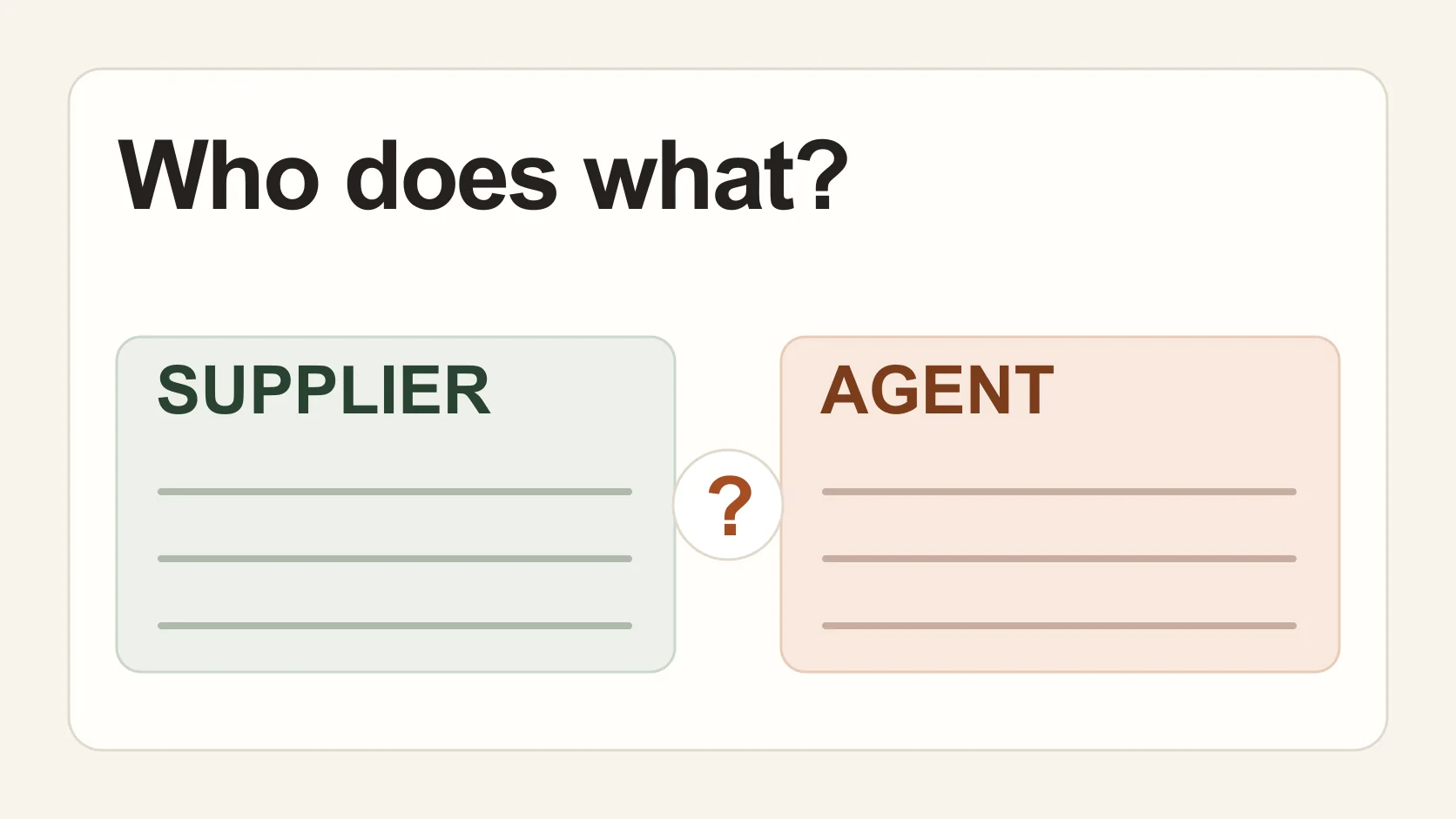
A dropshipping supplier can sell you the product and send each order to your customer. A sourcing agent can find and coordinate the businesses doing that work. Shopify notes that a provider may cover both roles, so read the quote for what it has actually agreed to.
If one supplier can make the product, follow your order instructions and dispatch each parcel, working directly may be enough. An agent earns its fee when it takes on coordination you would otherwise have to do, such as managing several suppliers or an agreed inspection and dispatch handoff. Ask who will actually do those jobs before paying for an extra layer.
You'll still need to answer the buyer when an order goes wrong. Shopify's dropshipping guidance puts customer service and order tracking with the seller, even when a supplier ships the parcel.
What changes when an agent sits between you and the supplier?
With a direct supplier, your product brief, changes and customer orders go to the business selling you the goods. It may manufacture the item, buy it elsewhere or use another company to send it. Check the actual arrangement for your product. The private supplier guide covers how to establish who makes and handles the item.
An agent gives you a contact who can approach suppliers and coordinate agreed work. That can save you the job of chasing separate manufacturers or passing files between them. But “we handle fulfilment” could mean the agent packs orders, passes them to a warehouse, or simply sends instructions to a supplier. Ask which it is.
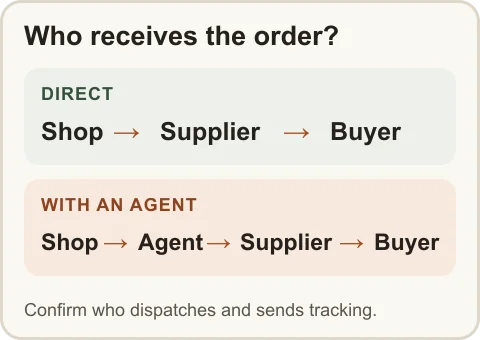
Two possible routes. Confirm who receives each order, who dispatches it and who returns tracking before you choose.
The same goes for quality checks. A photo of a carton, a check of every outgoing parcel and an inspection against your approved specification are different services. Find out what is checked, when, by whom and what record you'll receive. Don't assume the agent's fee includes an inspection just because the proposal mentions quality control.
Count the handoffs you would otherwise manage yourself. If the supplier can answer the product and dispatch questions clearly, try that route first. If you're asking one party to source components from several businesses and another to pack individual customer orders, ask an agent to price and own that coordination. Either way, write down where the agent's work ends and the supplier's begins.
If you sell on Etsy, check the item first
Etsy restricts dropshipping ready-made products, with a limited exception for craft and party supplies. A production partner may make and ship an eligible item based on your original design or the buyer's customisation. Hiring an agent doesn't change which products Etsy allows.
For an eligible production-partner arrangement, Etsy requires you to disclose the partner on the relevant listing and show the actual shipping location. Its production-partner guidance explains the distinction. Check eligibility before you compare supplier and agent offers, so you're pricing an order you can actually sell.
Map the work before comparing prices
Use the same blank map with each candidate. Put a person or business beside every job. If a candidate cannot name who performs it, leave the row open and ask again. The rows are questions, since services vary by provider.
| Job | Who does it? | What will you see or approve? |
|---|---|---|
| Product selection and specification | [name] | Product reference and current specification |
| Sample and any later change | [name] | Sample reference, approval and substitute rule |
| Purchasing and stock holding | [name] | Who pays, owns and stores any stock |
| Product or parcel check | [name] | Check method, timing and report or photos |
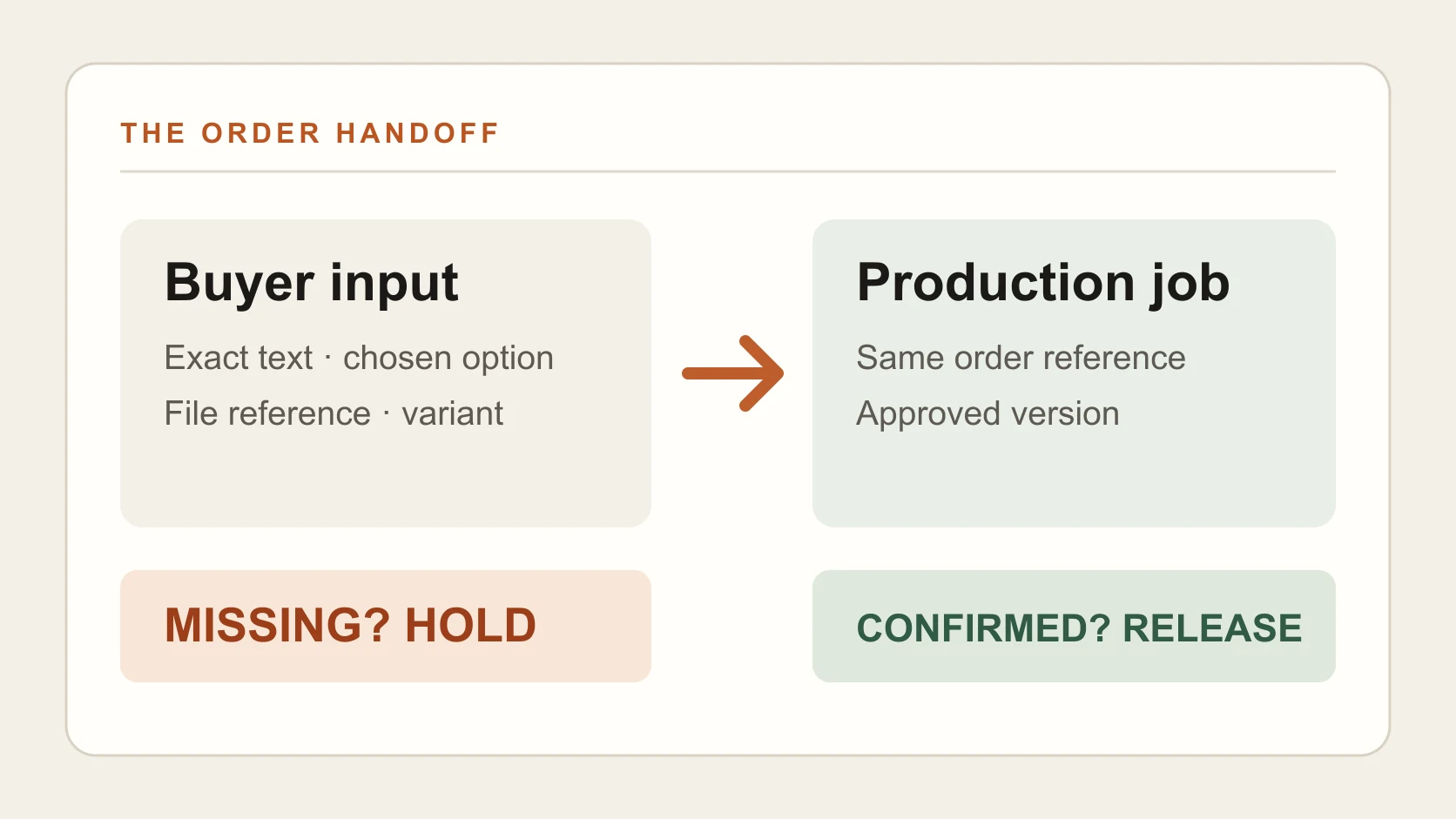
| Customer-order handoff | [name] | Required fields, recipient and pause rule |
| Packing and dispatch | [name] | Packing instruction, dispatch origin and tracking handoff |
| Fault, loss or return | [name] | First contact, evidence needed and agreed remedy process |
Start with stock ownership. A supplier might hold its own catalogue stock, while a custom product could require you to buy a batch before individual orders begin. Those arrangements change the money at risk and who decides what happens to unsold units. Get the answer in writing for the product you're buying.
Then trace one customer order from your shop to the packer. Who receives the selected variant? Who can stop a parcel if the instruction is incomplete? Those answers matter most when an order changes after you've sent it.
Give problems an owner as well. Your customer will contact you. You need to know which business can locate the parcel, identify the affected stock or approve a replacement. A general promise of “support” won't tell you what evidence they need or when they can act.
Compare the cost of a completed order
A lower product price can be swallowed by separate handling and shipping charges. Ask each candidate for the same product specification, destination and order pattern, then collect the charges on the same basis:
- Product cost and any sample or setup charge.
- Agent fee or markup, and what work it pays for.
- Stock purchase or storage commitment, if there is one.
- Packing, inserts, individual-order handling and shipping.
- Charges for a failed delivery, change, return or replacement, if their terms specify them.
Keep unanswered lines as unanswered. Don't enter zero because a charge was missing from the first quote. Ask whether the agent invoices you, the supplier invoices you, or both do. That makes it easier to see who is responsible for each payment and which costs could move after a supplier change.
The supplier quote worksheet helps you put the numbers and exclusions side by side. An agent's fee may still be worth paying if it covers work you would otherwise have to arrange. Judge it against a complete order and a clear service scope, rather than the advertised unit price alone.
Ask each candidate to walk through one order
Send the same request to a direct supplier and an agent you're considering. Ask them to mark any part they would subcontract and any step they expect you to do. Keep the reply with their quote.
Shopify recommends test orders to see how a supplier handles the order, tracking, packing and communication. If a candidate's written process looks sound, arrange a controlled order using your own details. Check the parcel and the records against the promises in the quote. One test shows how that order was handled; keep the checks in place for later changes to product or provider.