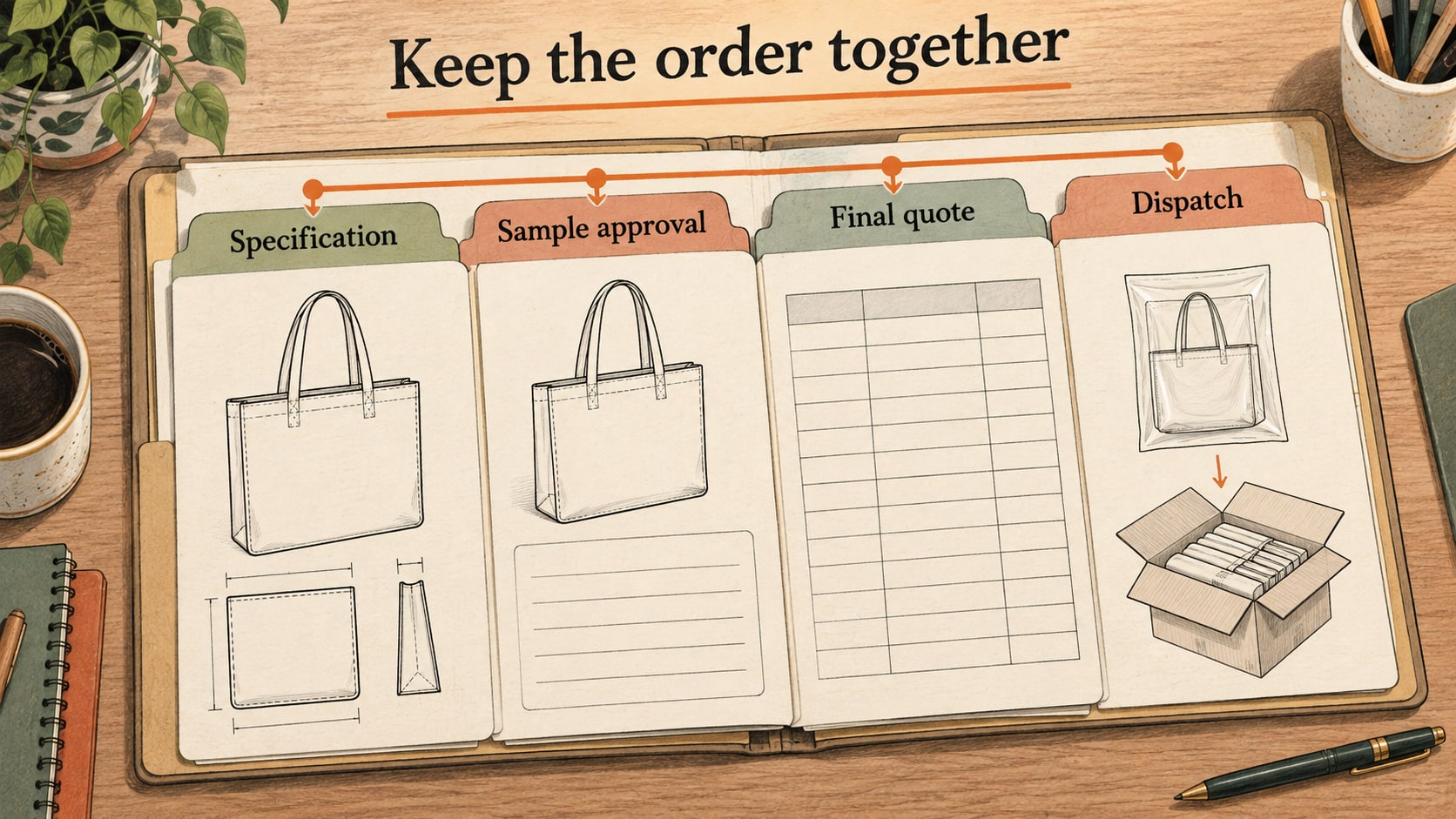
Working with a supplier gets easier when each order has a clear record: the product you're buying, the version you've approved, the price and the next action. Keep those decisions together so a new quote or a change of contact doesn't send you back through weeks of messages.
Build the process around the order. You can use it for a first batch, personalised customer orders or a repeat purchase, with different checks where the product needs them.
Write the order before requesting the price
Start with a product brief. Include the reference, material, dimensions, finish, quantity and any personalisation. State where the goods need to go and whether they travel together or as individual customer parcels.
Give the brief a version and date. Separate fixed requirements from changes you're willing to consider. That lets the supplier propose an alternative without silently replacing the item you wanted priced.
For customer personalisation, describe how the details change between orders. Decide how you will supply the text or artwork and identify which approval allows production to start.
The supplier quote template turns those details into a request you can reuse. Send the same version to each supplier in the comparison.
Choose from evidence you can compare
Read the replies against your brief. Look for what the supplier can confirm, what it proposes to change and what it hasn't answered.
Keep unanswered items visible. A complete quote and an incomplete quote don't give you a sound basis for deciding which costs less.
| Decision | Evidence to keep |
|---|---|
| Can this business do the work? | Its explanation of the processes and businesses involved, plus the checks you've carried out |
| Is this the product you want? | The specification, sample reference and review findings |
| Can it fulfil your order arrangement? | Confirmed packing, stock and dispatch process |
| What will you pay? | The final quote, included charges and payment stages |
| What still needs resolving? | A short list with an owner and next action |
Choose checks suited to the product and commitment. The private supplier guide covers business verification, while the electronics guide addresses model-specific documents and testing.
A productive first conversation should leave you understanding the work more clearly. Use the answers and evidence to judge the fit. Reply speed on its own tells you very little about whether the product will meet your specification.
Use approvals that refer to a specific version
Make each approval precise enough for another person to act on. “Looks good” is difficult to use later. A sample reference, specification version and record of remaining checks gives the supplier something concrete.
Keep the stages distinct:
- Review the sample against the product brief, including any differences from planned production.
- Confirm the production specification, quantity, quote and agreed conditions before authorising the order.
- Review the agreed inspection or acceptance evidence before the next release or payment stage.
- Confirm the packing and dispatch details against the order.
The timing and payment conditions depend on your agreement. Define them in advance rather than assuming every supplier works to the same deposit split.
For an independent pre-shipment inspection, give the inspector the relevant specification and acceptance criteria. SGS describes checks covering quality, quantity, markings and packing. The scope needs to fit your order. SGS's inspection guidance.
Keep changes in the order record
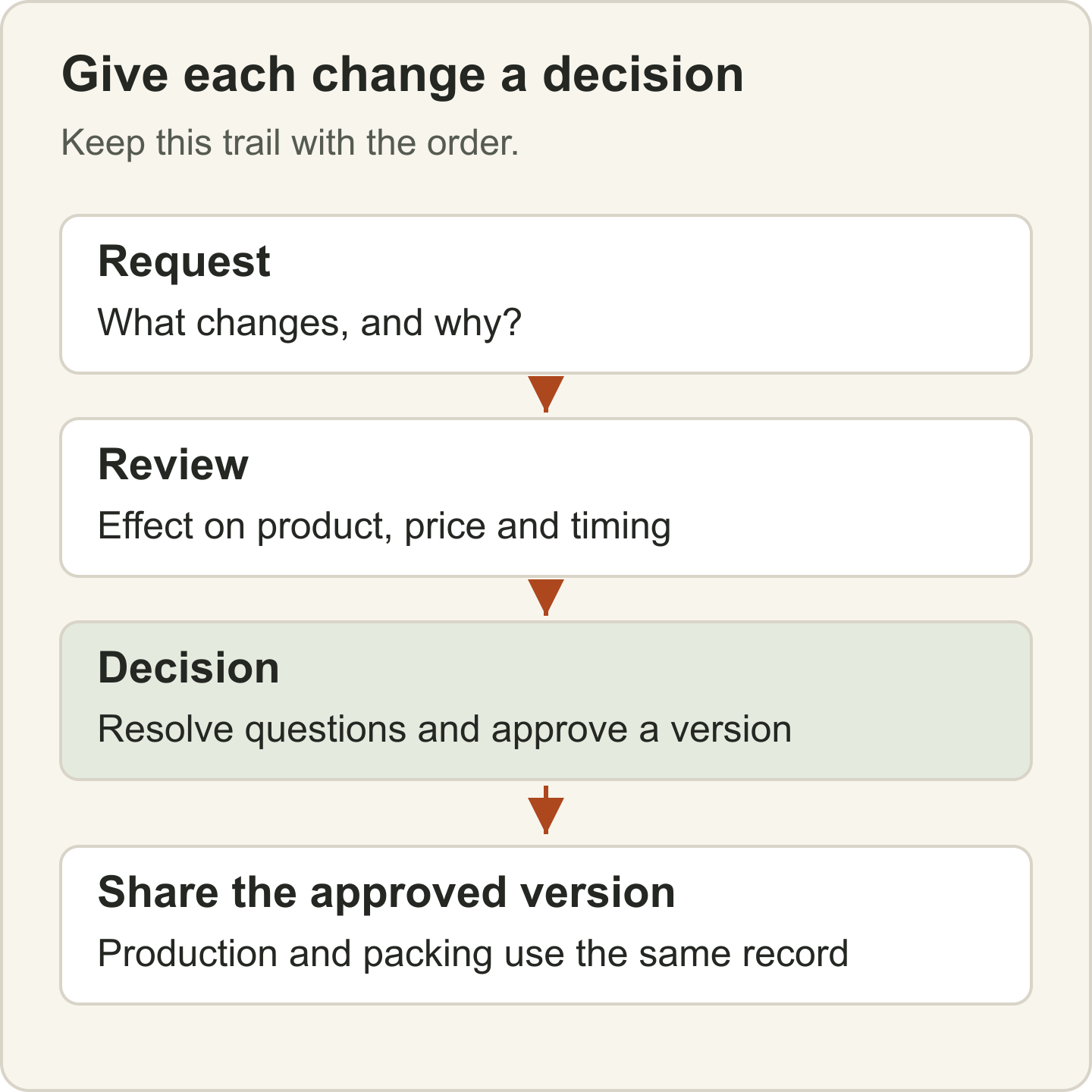
When something changes, record the request, its effect and the decision. A replacement material can affect the product; a new dispatch location can affect delivery; a different box can affect the shipping quote.
Don't leave the approval attached to an old file. Save the revised version and make clear which one now applies. Give the people handling production and packing access to that same record.
For stock held on your behalf, include the quantity owned, storage arrangements and reorder process. Decide who can authorise a substitute or pause an order. Those decisions shouldn't be left to whoever notices the shortage first.
SupplierMafia keeps supplier conversations, quotes and order files together, including access for your team. Use that record to make the current agreement easy to find. The agreed product, packaging and shipping costs are paid directly to the supplier.
Deal with a problem while the evidence is clear
Describe the difference between what was agreed and what happened. Include the affected order reference and the evidence the supplier needs to identify the issue.
For a product problem, use clear photographs, measurements or the relevant inspection findings. For timing, identify the agreed milestone and the latest confirmed position. Keep assumptions separate from facts.
Keep the reply with the order and track the proposed remedy to completion. If the issue affects customer commitments, use the confirmed information to decide what you need to tell the customer. Don't pass along a new date that the supplier hasn't actually committed to.
Make the next order easier to place
Before reordering, review what the previous order established. Keep the approved specification, the checks that found useful information and any changes agreed after a problem.
Then request a current quote and timing for the next quantity. The old invoice records the previous purchase; it doesn't establish today's availability or price. A pro forma invoice can record a new quotation, including payment and shipment terms. The International Trade Administration explains the document.
Send the next order with the approved reference and any requested changes clearly listed. The supplier should be able to see what stays the same, what needs pricing and what requires another approval.