A supplier quote is only useful once you know what the price covers. Send each supplier the same product specification, quantity and destination. Then ask them to separate the charges so you can compare the replies without filling in the gaps yourself.
The request below gives you a starting point. Replace the brackets, remove anything that doesn't apply and attach the same product brief to each enquiry.
Copy the quote request
For individual customer deliveries, describe the contents of one complete parcel. Keep bulk stock purchases separate from the price of preparing and sending that parcel. They affect different parts of your order plan.
Give the supplier something precise to price
A reference photo can show the look you're after, but it leaves room for assumptions about material, dimensions and construction. Put those details in the attached brief and mark which ones are fixed.
Give the file a version and date. When you revise it, send the updated version to every supplier still in the comparison. Otherwise, you can end up comparing the old specification with a newer, more expensive one without noticing.
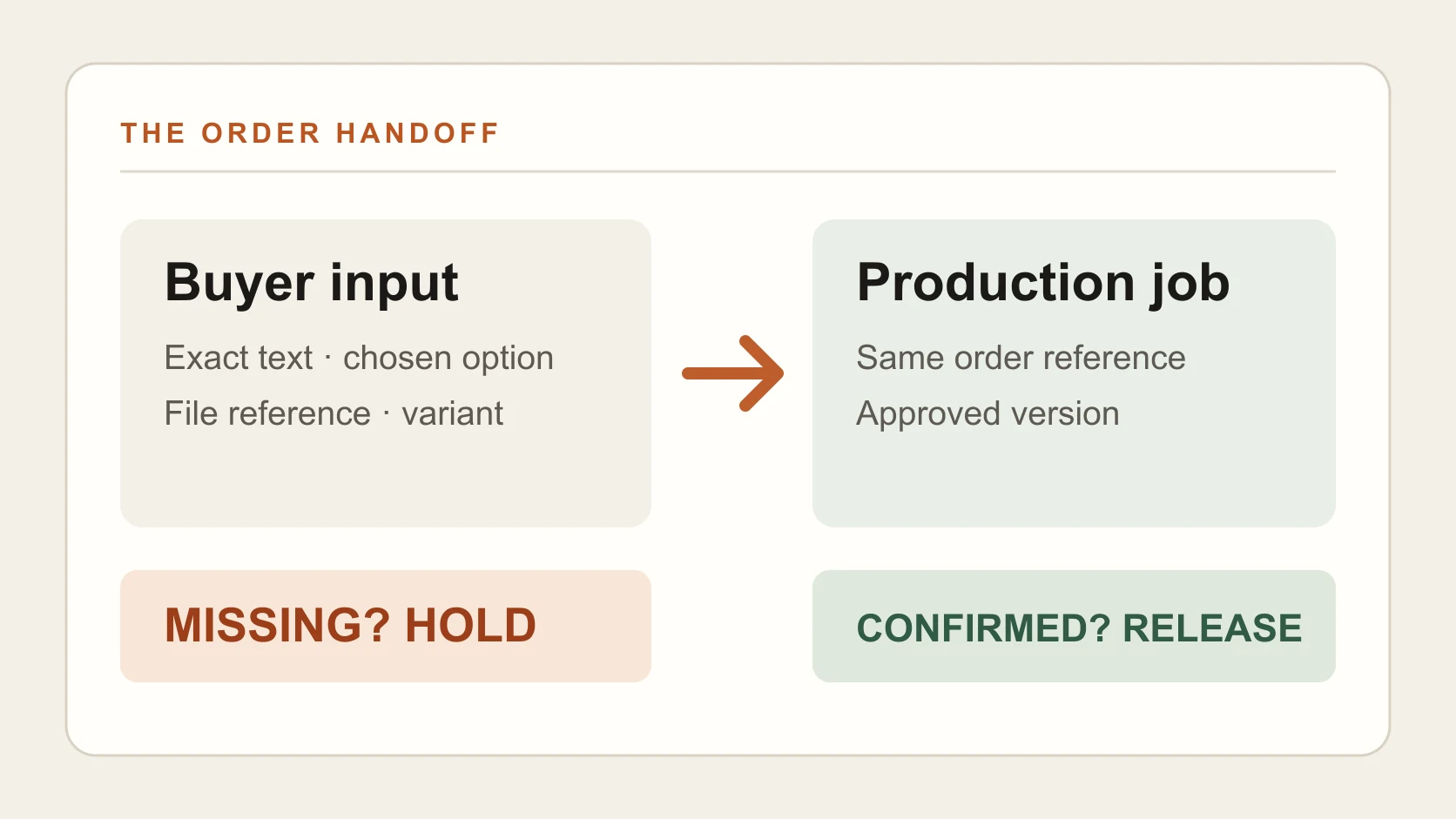
For personalised products, explain what changes with each customer order. A brand logo repeated on every unit is a different request from a new name or image each time. Specify how the artwork is supplied, whether you need a proof and what approval allows production to begin.
Future volume can be included as context. Keep the first quantity you're ready to buy clearly identified, so the supplier doesn't only return a price for the larger order you hope to place later.
Read the delivery line properly
“Shipping included” needs a destination and a defined service behind it. Establish where the charge starts, where it ends and which costs remain yours.
Parcel size matters here. DHL Express's UK guidance uses the greater of actual and volumetric weight to determine chargeable weight. That means the packed dimensions can affect the price even when the product is light. Confirm the calculation for the quoted service. DHL's weight and dimensions guidance.
If the quote uses an Incoterms rule, record the rule, version and named place. Those rules allocate responsibilities, costs and risk between buyer and seller. They don't make an incomplete delivery description complete. ICC's Incoterms overview.
Ask the supplier to spell out the included charges as well. You should be able to put the answer into your comparison sheet without guessing what an abbreviation covers.
Compare replies on one worksheet
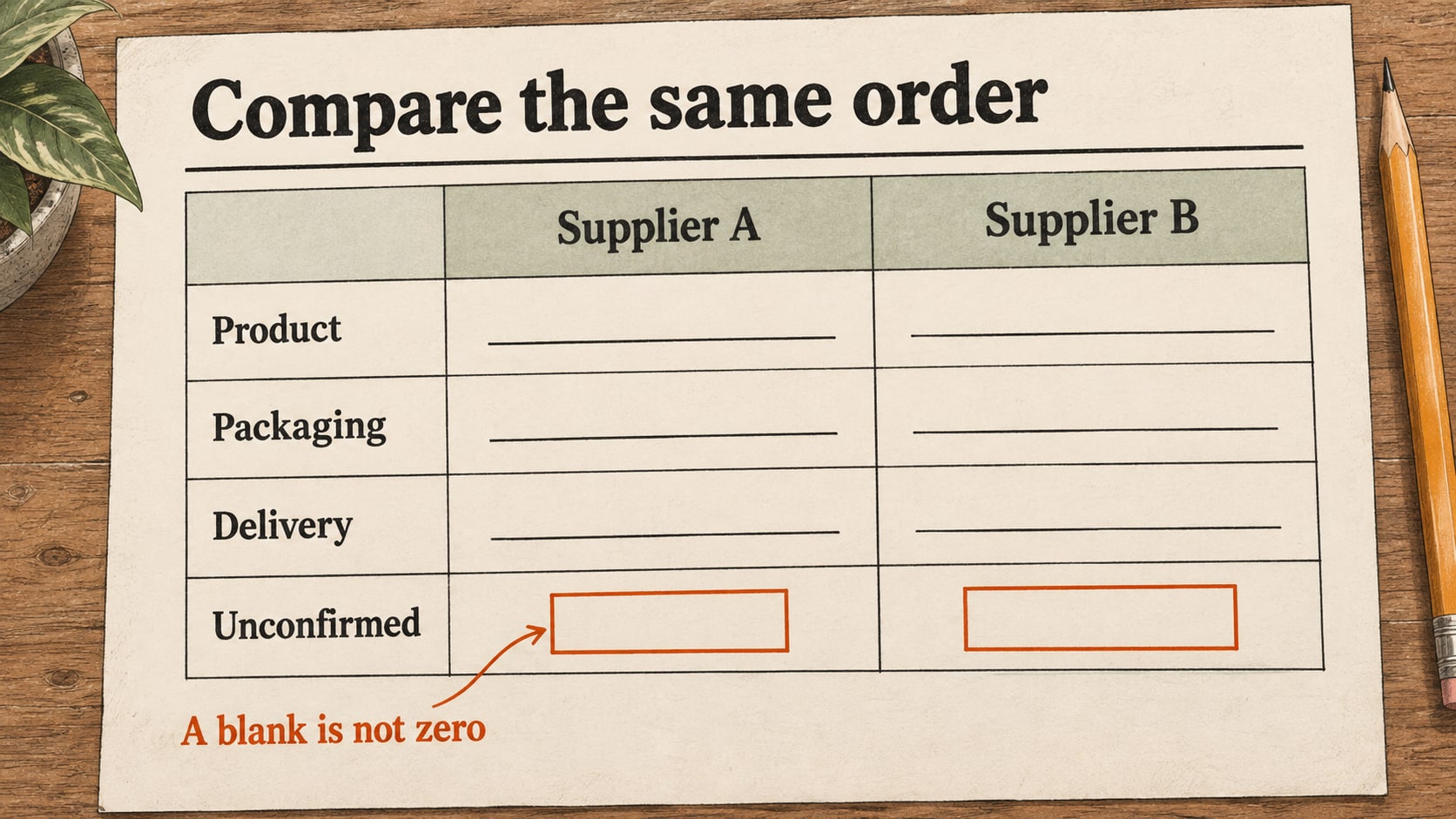
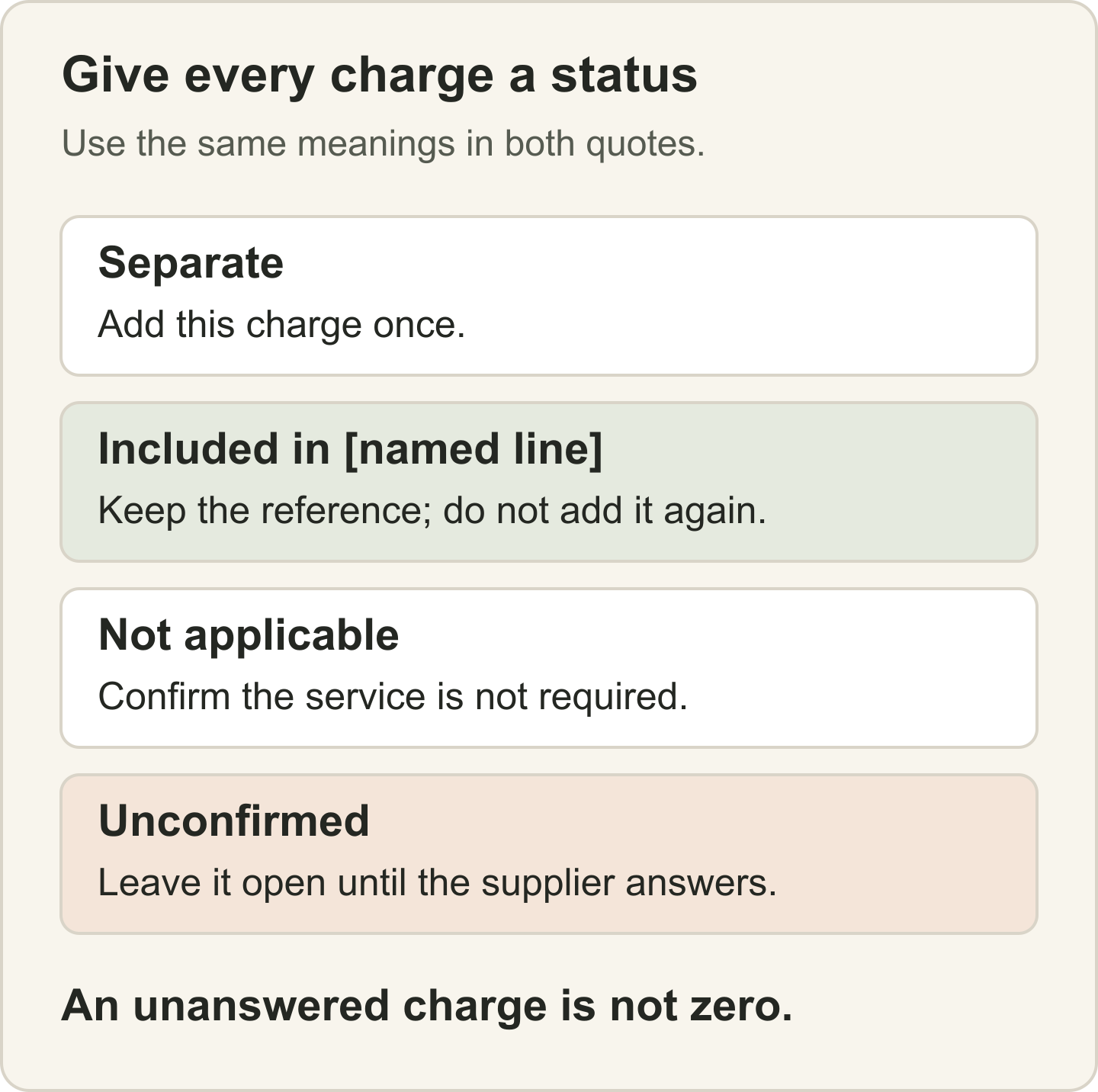
Use one of four descriptions for each charge: “separate”, “included in [named line]”, “not applicable” or “unconfirmed”.
A blank answer stays unconfirmed. It isn't a zero.
| Check | Supplier A | Supplier B |
|---|---|---|
| Quote reference, expiry and currency | [enter] | [enter] |
| Specification version and substitutions | [enter] | [enter] |
| Quantity and variant split | [enter] | [enter] |
| Product total | [amount] | [amount] |
| Personalisation and packaging | [amount or status] | [amount or status] |
| Setup and samples | [amount or status] | [amount or status] |
| Shipping service and destination | [enter] | [enter] |
| Shipping and import charges | [amounts and status] | [amounts and status] |
| Confirmed subtotal | [amount] | [amount] |
| Costs still unanswered | [list] | [list] |
| Payment stages and fees | [enter] | [enter] |
| Preparation and transit estimates | [enter separately] | [enter separately] |
Check for double counting before adding the rows. If packaging is already included in the product price, label it that way. A deposit against the order total belongs under payment stages, rather than being added to the cost again.
Keep any sample credit visible, with the condition and point at which it applies. For different currencies, record the exchange rate and date used for the comparison, along with payment or conversion fees.
Now read across the non-price rows. If the specification, quantity or destination differs, resolve that before treating the subtotals as comparable.
Close the gaps before accepting
Send the unanswered points back as a short list. Get the supplier to revise the quote once those details are settled, rather than leaving the final arrangement spread across several replies.
The document may be called a pro forma invoice. The US International Trade Administration describes this as a quotation presented in invoice form, with information including payment terms, estimated shipment and validity. ITA's pro forma invoice guidance.
Save the final quote beside the approved specification and sample record. When you come back to the order, those documents should tell you what you accepted and what it will cost.