A private supplier from China is a factory or trading company that produces goods under your brand, not theirs, with custom packaging and, for true private label, custom design or formulation. Finding a real one is less about which platform you use and more about what category you're sourcing, what stage your business is at, and whether you've defined your spec before you wire the deposit.
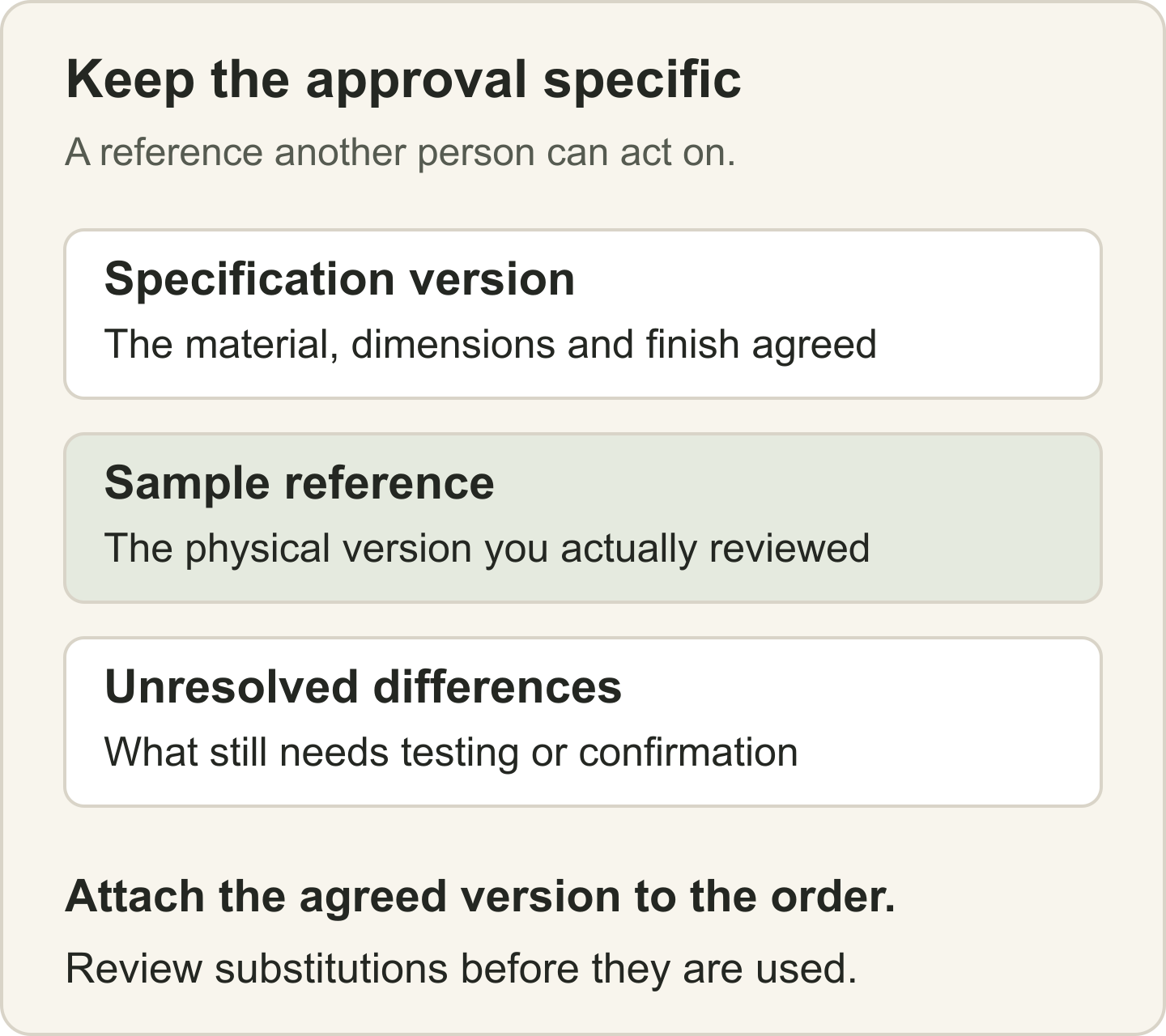
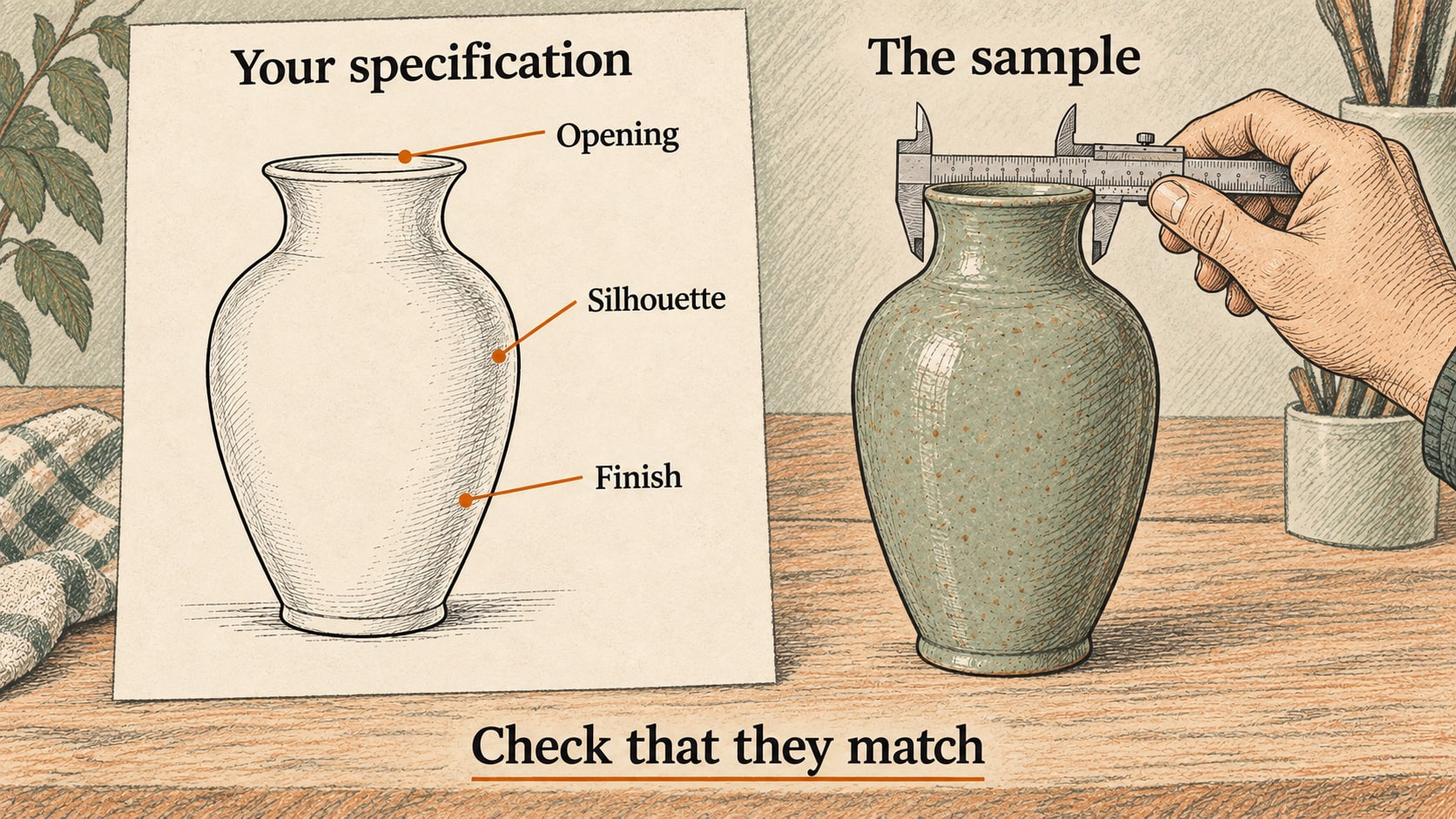
Most first-time sourcers fail at the same step. They pay 30% deposit, send a Pinterest mood board, and three weeks later open a sample box that looks nothing like the reference.
The fix isn't "better communication." The fix is knowing what "private supplier" actually means before you start, picking the right pathway for your stage, and writing a tech pack the factory can quote against. Field Notes is the field manual we wish existed when we started sourcing. This piece is the long version: definitions, geography, the platform-stage matrix, the verification checklist, payment terms, the Spring Festival calendar, and the decision framework.
By the end you'll know whether you should be on Alibaba, 1688, in Yiwu, or in a coordinated warehouse. You'll know what 30/70 actually means. You'll know why "factory direct" is sometimes the worst option for your first order. And you'll know exactly what dates the factory's WeChat will go quiet next February.
What "private supplier from China" actually means
Four terms get used interchangeably in this category. They aren't interchangeable.
Private label. You design the product, the packaging, the formula or the cut, and the factory produces it under your brand. Highest cost, highest control, biggest moat against copycats. Typical lead time runs eight to twelve weeks for first orders.
White label. The factory has a stock product. You apply your brand to it. Cheaper and faster than private label, but anyone else can buy the same product under their brand. Common for skincare, candles, generic accessories.
OEM (original equipment manufacturer). The factory produces to your specifications, often as a hidden manufacturing partner. Heavy in electronics where the buyer brings the design and the factory provides production capacity.
ODM (original design manufacturer). The factory designs and manufactures, and you license or rebrand. Common for consumer electronics where a Shenzhen factory has shelf-ready products you can apply your brand to.
| Term | Who designs | Who owns the design | Typical use case |
|---|---|---|---|
| Private label | You | You | Apparel, supplements, candles, branded skincare |
| White label | Factory (stock) | Factory | Generic accessories, small appliances, basic skincare |
| OEM | You | You | Electronics, custom hardware, technical products |
| ODM | Factory | Factory (you license) | Consumer electronics, off-the-shelf devices rebranded |
Most "private supplier" articles use these terms loosely. When a factory says "we offer OEM" they may mean OEM, ODM, or both. Ask which one. Ask whether they have stock product you can rebrand or whether you need to bring your own spec.
The other useful distinction: factory vs. trading company. About 70% of "manufacturers" listed on Alibaba are actually trading companies. For private label, this is often a feature rather than a bug. A trading company that coordinates a candle factory, a glass jar factory, a printed-box factory, and a foam-insert factory into one container is doing real work. A real factory only makes one of those things.
We've shipped both ways. The trading-company route, with the right partner, almost always wins on first orders.
Where private suppliers actually live, by category
China's manufacturing geography is not interchangeable. The factory clusters specialise.
Electronics: Shenzhen, especially Huaqiangbei. PCB design, assembly, Bluetooth audio, wearables, smart home, accessories. Surrounding Dongguan handles the heavy assembly. If you're sourcing electronics, Shenzhen is where you start. The full deep-dive lives in our China electronics supplier guide, which covers FCC and CE compliance, lithium-battery shipping, and the verification process specific to the category.
Home goods, decor, candles, seasonal: Yiwu, Zhejiang. Yiwu Futian Market is the largest wholesale commodity centre on Earth. Roughly 75,000 booths, $70 billion in annual trade volume, and an estimated 60% of global Christmas decorations. For decor, kitchenware, candles, picture frames, artificial flowers, and small homewares, Yiwu is the answer. Our China wholesale home goods suppliers piece goes deeper on Yiwu agents, MOQ ranges, and Prop 65 compliance.
Apparel and textiles: Shantou and Shaoxing. Shantou for finished garments, particularly cut-and-sew at lower MOQs (cotton tees from 500 units in some cases). Shaoxing for raw fabric and heavier textile production. Tech pack discipline matters most in this category, because the sample-to-bulk gap is widest here.
Beauty and cosmetics: Guangzhou, especially Baiyun district. Skincare, hair care, fragrance, packaging. Baiyun is where most Western indie beauty brands quietly produce. MOQs typically 1,000 to 5,000 units for white label, 5,000 to 20,000 for true private label with custom formulation.
Kitchenware and tabletop: Chaozhou and Foshan. Chaozhou for porcelain and ceramics. Foshan for stainless steel and aluminum. Both have established export experience. MOQs run higher than home decor (500 to 2,000 units typical for ceramics).
Furniture and large items: Foshan and Dongguan. Foshan for case goods and upholstery. Dongguan for office furniture and assembly. Container math matters most here because freight cost dominates unit economics.
Pick your category before you pick your supplier. A Yiwu trading company is the wrong tool for a Bluetooth speaker. A Huaqiangbei electronics factory has no idea how to ship a 500-unit candle order. Geography is destiny in private-label sourcing.
The platform-stage matrix
The platform you use should match your stage. Listicles that say "use Alibaba" don't help an operator on their fortieth order, and "use a sourcing agent" doesn't help a first-timer who needs to learn the field.
| Stage | Recommended platform | Why |
|---|---|---|
| First test order, under $5,000 | Alibaba.com with Trade Assurance + paid PSI | English support, escrow, contained risk, fast learning |
| Repeat orders, single category, $5K to $50K | 1688.com via Yiwu agent or coordinated warehouse | 30 to 60% cheaper than Alibaba, requires Mandarin partner |
| Multiple SKUs with custom packaging | Coordinated warehouse model | One conversation handles five vendors at once |
| $50K+ monthly volume, single SKU | Direct factory relationship via Made-in-China or Global Sources | Your scale earns priority and direct factory pricing |
A note on each:
Alibaba.com. The default first stop. Filter for Verified Supplier and Trade Assurance, and treat those as the floor not the ceiling. Pay only via Trade Assurance for first orders under $20,000. The catch: most listings are trading companies, and the MOQ on the listing is almost always negotiable while the MOQ in the supplier's actual system usually isn't.
1688.com. Alibaba's domestic Chinese platform. Same factories, often the same SKUs, priced for the Chinese market. You can't use it without Mandarin or a partner who reads it. Once you have a partner, 1688 is where the real factory pricing lives.
Yiwu booth-walk via agent. For decor, seasonal, candles, and small homewares, a Yiwu agent who walks the Futian Market on your behalf consolidates ten booths into one shipment. Agent commissions run 5 to 10% of order value. Worth every dollar for first multi-SKU orders.
Made-in-China and Global Sources. Skew toward larger, export-experienced manufacturers. Smaller catalog than Alibaba, higher average operator quality. Best for kitchenware, tabletop, and categories where you want a real factory rather than a trading-company aggregator.
Coordinated warehouse model. The middle path between "DIY on Alibaba" and "fly to Shenzhen quarterly." A vetted partner runs the factory chain on your behalf, with one inbox covering every conversation. SupplierMafia operates on this model, with vetted suppliers in Yiwu, Shenzhen, Shantou, Guangzhou, and Dongguan, plus escrowed invoices and admin-mediated dispute resolution.
Want the field manual on which platform to pick for your category? Browse the vetted supplier directory free, no credit card, no email gate.
How to vet a private supplier from China
Six steps. Skip any of them on orders above $5,000 and you're running on luck.
1. Validate the unified social credit code
Every legitimate Chinese company has an 18-character unified social credit code on their business license. Ask for the license. Check it on gsxt.gov.cn, the State Administration for Market Regulation registry. You're looking for: the company exists, the address matches the business license, the registered capital is plausible, and the business scope includes manufacturing or wholesale of your category.
Red flag: registered capital of 30,000 RMB on a company claiming injection molding capacity. That's about $4,200. They're not running a factory.
2. Demand a video walkthrough on WeChat
Ask the supplier to walk through their facility on WeChat video. Production line, QC station, warehouse, packaging area. Real factories take five minutes to do this. Trading companies hesitate, then offer photos instead.
If a "supplier" tries to move the conversation to WhatsApp or Telegram before the walkthrough, that's a signal of fraud, not a preference. The off-platform attempt is the leading indicator.
3. Run a third-party audit
SGS, QIMA, AsiaInspection, or Bureau Veritas will run a factory audit for $400 to $1,200. The audit covers operations, equipment, worker count, quality systems, and a baseline production sample. Skipping this step on orders above $5,000 is the most common reason buyers lose deposits.
4. Order paid samples
A sample is not a sample if you only test "does it work." For private label, test against your tech pack. Fabric weight, stitch density, label placement, packaging dimensions, weight tolerance. For electronics, test under load. For ceramics, test the glaze for lead.
Pay for the sample. Free samples come from suppliers desperate to close, and the sample they send rarely matches mass production. Paying $50 to $300 for a real sample protects the deposit you're about to wire.
5. Run a pre-shipment inspection
A pre-shipment inspection (PSI) costs $300 to $500 and is a third-party visit before goods leave the factory, with random unit testing against an Acceptable Quality Limit. AQL 1.5 for major defects, AQL 2.5 for minor, is a reasonable starting point for most private-label orders.
Run the PSI before you wire the balance. If the inspection fails, you have leverage. After the goods are on the water, you have a phone call.
6. Verify two or three references in your region
Ask for three current customers in your region. Email them directly. Most suppliers won't give references, and the ones who do, whose references actually respond, are a different tier of operator.
The full vetting framework, with category-specific add-ons, runs in our China electronics supplier guide. Same six steps, with electronics-specific compliance layered on top.
Conversation patterns that signal "real" vs. "broker"
The first three messages with a supplier tell you most of what you need to know. Watch for these patterns.
The MOQ test. Ask for MOQ on a specific SKU at three quantity tiers (e.g., 200, 500, 1,000 units). A real factory or experienced trading company answers all three with prices, not just the highest. A broker or unprepared listing-poster answers vaguely or pushes you to "discuss on call."
The lead-time test. Ask for production lead time and ocean freight transit time separately. A real operator gives you 25 to 35 days production, plus 25 to 35 days ocean to a US west coast port. A vague "2 to 3 months" suggests they don't know.
The sample test. Ask for a paid sample with full spec discussion. A real partner asks clarifying questions on the spec. A broker says "yes, we can do that" without asking anything.
The MOQ-on-listing trap. When the Alibaba listing says MOQ 500 but the supplier replies with MOQ 5,000, that's not negotiation. That's bait-and-switch. Walk away. The honest factories quote real MOQs from the start.
When Marcus, a Shopify operator launching a private-label cotton tee in early 2025, wired a $14,000 deposit on a 5,000-unit order from a Shantou "factory" he hadn't audited, his first sample looked correct. Bulk production drifted by about 30%, with stitch density off-spec on roughly 1,400 units. The factory blamed "fabric variation." A QIMA audit, ordered after the bulk arrived, revealed the "factory" was a trading office subcontracting to three different shops. The audit cost $650. Skipping it cost him a season.
Payment, contracts, and money that moves with proof
Standard payment terms for new relationships: 30% deposit, 70% on bill of lading copy. Once you're in a repeat-order relationship, 30/40/30 (deposit, midway, on BL copy) is common.
Pay only via bank wire to a verified company account that matches the business license. If a supplier asks you to wire to a personal account, or to Hong Kong when the company is registered in Shenzhen, walk away. Paying via WeChat, Alipay personal, or any payment-app handle is a fraud signal regardless of who's asking.
For first orders under $20,000, Alibaba Trade Assurance is genuinely useful. Funds escrow until you confirm receipt and quality. The fees are real but cheaper than recovery.
The other useful tool is a platform that handles invoices end-to-end. SupplierMafia escrows every invoice through the chat surface itself: the supplier issues an invoice, you upload payment proof, the supplier confirms receipt, and every state change gets timestamped and audit-logged. If goods arrive off-spec, dispute resolution is human-mediated, not auto-routed. The point is that money moves with proof, not promises.
For private-label specifically, two contract clauses operators forget:
Tooling ownership. If you pay for custom moulds, injection tooling, or packaging die-cuts, the contract must explicitly state you own the tooling. Otherwise the factory keeps it and can produce parallel units for a competitor.
The NNN agreement. An NDA is what Western lawyers default to. It is mostly worthless in China. What you want is an NNN: Non-disclosure, Non-use, Non-circumvention. Written in Chinese, governed by Chinese law, enforceable in a Chinese court. A standard NNN runs $300 to $800 from a China-IP-experienced lawyer. Get one before you send tech specs, packaging files, or product designs.
The Spring Festival calendar and other lead-time killers
This is the section nobody else writes, and it's the single biggest lead-time tax on Western buyers.
If your factory's WeChat goes quiet between January 20 and February 24, that's not them ghosting. That's Spring Festival, the most important holiday in China, and roughly 70% of factories shut entirely for two to three weeks.
Spring Festival 2026: February 17. Factories typically shut roughly February 10 to 24. Full ramp-up takes another two to three weeks of warm-up production after staff return. Net effect: any production scheduled to overlap February 1 to March 15 is at risk of slippage.
Practical implications:
- Aim for deposit payments to land by mid-November for pre-CNY production windows. Anything later is rolling the dice on whether the factory finishes before shutdown.
- Plan ocean freight bookings before mid-January. Yantian and Shenzhen ports get jammed for two weeks before CNY as everyone rushes shipments out.
- Add three weeks of buffer to any lead time that crosses February. A "30-day production" estimate becomes 50-plus.
- Re-confirm specs with your supplier in early February before they leave. If they leave with an unanswered question, it stays unanswered until late February.
The other holidays worth tracking:
| Holiday | 2026 dates | Impact |
|---|---|---|
| Spring Festival (Chinese New Year) | Feb 10 to 24, ramp-up to mid-March | Major. Factories shut, ports jam. |
| Mid-Autumn Festival | September 25 | One or two days. Minor. |
| October National Day (Golden Week) | October 1 to 7 | One week. Factories typically take 5 to 7 days. |
When Sarah, a Shopify candle brand owner, placed a $22,000 deposit on January 18, 2025, she didn't know her Yiwu trading company would shut from January 28 to February 18. Her February 14 launch slipped to early April. She had pre-sold 800 units and refunded most of them. The fix on her next order, in October 2025: she paid the deposit on November 6, locked production for early January delivery, and shipped before the freeze.
Lead-time math is the difference between launching on schedule and refunding pre-orders. Operators who plan around the calendar ship. The ones who don't, eat a six-week dead zone.
Choosing your sourcing pathway: a decision framework
There is no universal right answer. There is a right answer for your stage and your category.
| Stage | Recommended pathway | Why |
|---|---|---|
| First test order, under $5,000 | Alibaba Trade Assurance + paid PSI | Risk is contained, escrow works, learning is fast |
| Repeat orders, $5K to $50K | Yiwu agent or coordinated warehouse | Better unit economics, less project management |
| Multi-SKU brand-builder with custom packaging | Coordinated warehouse model | Multiple suppliers per SKU; one conversation per order |
| $50K+ monthly, single high-volume SKU | Direct factory relationship | Your scale earns priority pricing |
Most operators we work with at SupplierMafia land in the second and third rows. The product needs custom packaging, a printed insert, accessories from a different factory, and consolidated shipping. That's too many vendors for one founder running marketing and customer support at the same time.
The honest tradeoff: a coordinated warehouse model costs marginally more per unit than DIY-ing it on 1688, because the warehouse takes a margin on the consolidation work. What you trade for that margin is your time, your error rate, and the dispute coverage you don't have on a 1688 direct order. If your time is worth more than $50 an hour and your category is multi-SKU, the math usually favours the warehouse.
If your time is worth less than that, or your product is a single high-volume SKU and you can stomach the project-management load, direct factory wins.
Frequently asked questions
What is a private supplier from China?
A private supplier from China is a factory or trading company that produces goods under your brand, not theirs. Most also offer custom packaging. True private label additionally means custom design or formulation, not just rebranded stock product. About 70% of "manufacturers" listed on Alibaba are actually trading companies, which is often a feature for first orders rather than a bug.
What is the difference between private label and OEM?
Private label means you bring the design, the spec, and often the formula, and the factory produces under your brand. OEM (original equipment manufacturer) is similar but more common in technical categories like electronics, where the buyer brings the design and the factory provides production capacity. ODM is the inverse: the factory designs and you license or rebrand. White label is a stock product applied to your brand, with no custom design.
How much does it cost to start with a private supplier from China?
Plan for $1,500 to $3,000 in verification cost on a new supplier (factory audit, sample testing, NNN agreement) plus your first order. Realistic first private-label orders run $3,000 to $15,000 in goods, plus $500 to $1,500 in shipping, plus the verification spend above. On any order above $5,000, the verification cost is the cheapest insurance you'll buy.
Is it safe to order from a private supplier in China?
Yes, with the right precautions. Use Trade Assurance or platform escrow for first orders, run a third-party factory audit, order paid samples and test against your spec, and run a pre-shipment inspection before wiring the balance. The risk is not that "China" is unsafe; it's that you skip steps on a specific supplier.
How long does it take to get the first order from a private supplier in China?
Eight to fourteen weeks from first outreach to delivered inventory, on a typical order. That includes supplier outreach (1 to 2 weeks), sample evaluation (2 to 3 weeks), audit (1 week), production (3 to 5 weeks), and ocean freight (3 to 5 weeks to a US port). Anyone promising significantly faster is selling you a stock product, not a private-label one.
Can I work with a private supplier from China without going through Alibaba?
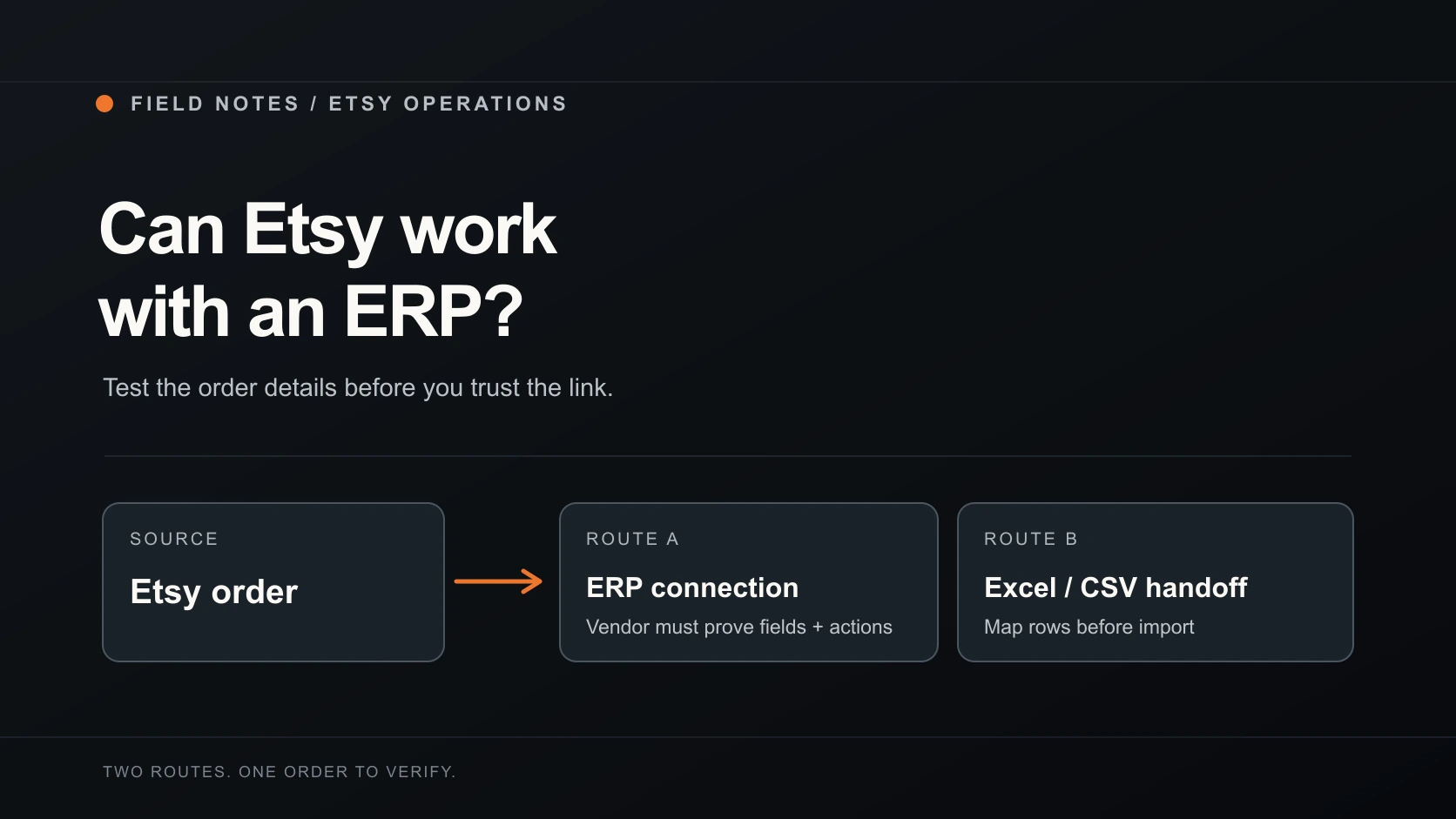
Yes. The other real options are Yiwu Market via a sourcing agent, 1688.com via a Mandarin-speaking partner, Made-in-China and Global Sources for larger factories, trade shows like the Canton Fair or Global Sources Hong Kong, or a coordinated warehouse model. Alibaba is the default first stop for English-speaking operators because of Trade Assurance escrow, not because it's the only path.
The bottom line
A private supplier from China is a category, not a vendor. The operators who build defensible brands pick their category first, pick their stage second, and pick their pathway third. The ones who skip those steps wire deposits to "factory direct" listings on Alibaba and find out the hard way that the term doesn't mean what they thought.
Pick your category before you pick your platform. Yiwu for decor, Shenzhen for electronics, Shantou for apparel, Guangzhou Baiyun for beauty. Pick your stage before you pick your platform. Alibaba for first orders, coordinated warehouse for scaling brands, direct factory for single-SKU volume. Pick your timing before you wire the deposit. Spring Festival 2026 falls February 17, and the production freeze runs roughly February 10 to mid-March.
If you've been burned by a ghosted factory or a 30% sample-to-bulk drift, you already know why we built SupplierMafia. Vetted suppliers we've shipped with, escrowed invoices with paper trails, and dispute mediation by humans, not auto-resolved bots. Get started, free. No credit card, no email gate, no countdown timer.
The field manual is what we wish existed when we started. The platform is what we wish existed when we started getting burned.