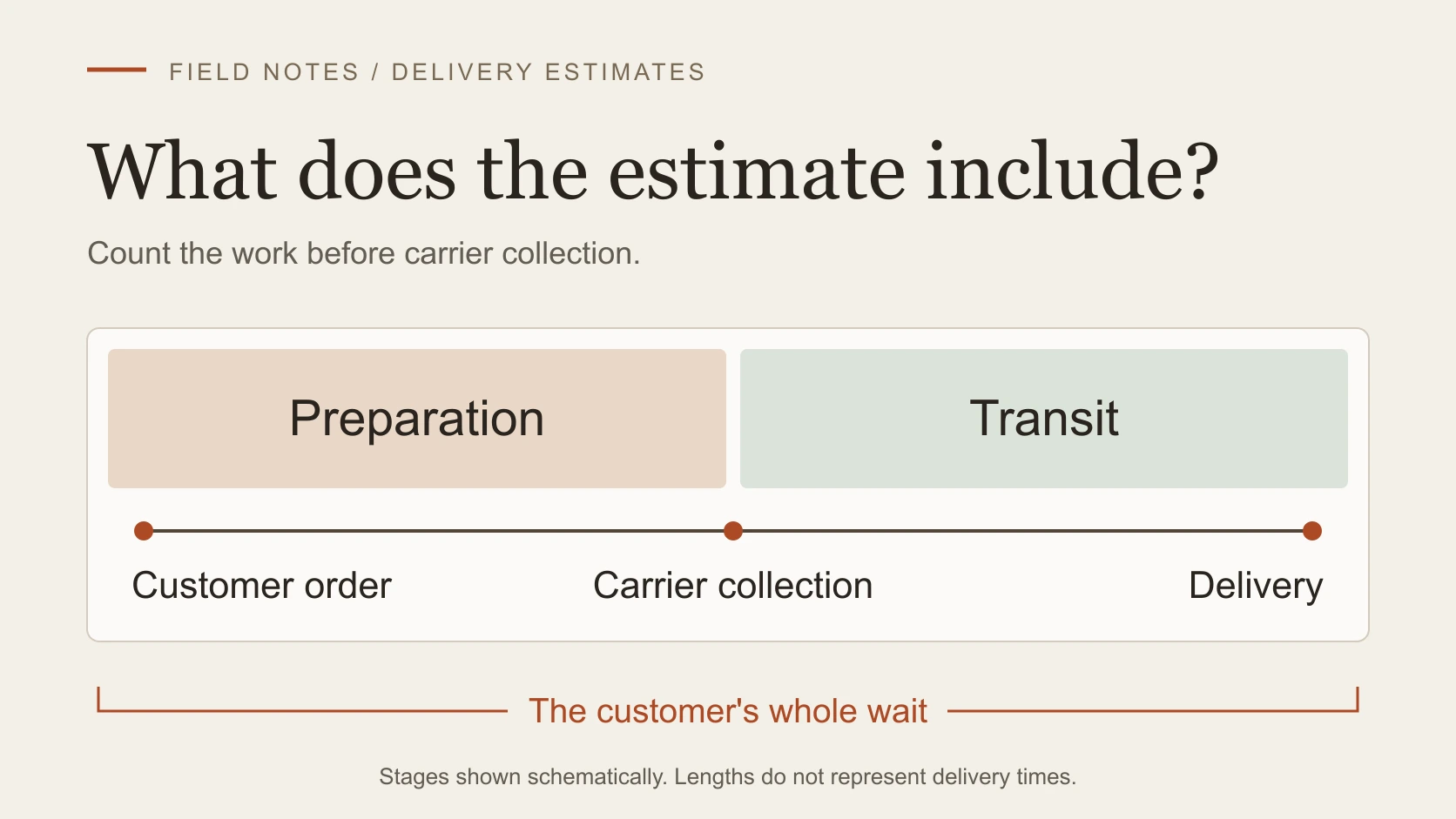
Check what a dropshipping shipping estimate includes before putting it on your listing. You need the time from the customer's order to delivery, with the work before carrier collection accounted for.
Start with one question for the supplier: which event starts this estimate? Payment, artwork approval and carrier collection describe different points in an order. Knowing the starting point lets you check whether the estimate covers the customer's whole wait.
Ask where the estimate starts and ends
Give every time range a start and a finish. For shipped goods, Shopify defines fulfilment time as the period from the customer's order to handing the parcel to a carrier.
Transit is the next part. Shopify's transit-time guidance covers carrier collection through to arrival at the customer's address and explicitly excludes processing.
Your supplier needs to define its own quoted terms just as clearly. Ask these questions against the actual product and delivery service:
| Detail | What to establish |
|---|---|
| Start event | Does the estimate begin when the supplier receives the order, receives payment, gets approved artwork or hands over the parcel? |
| End event | Does it end at dispatch, a destination hub or delivery to the customer? |
| Day basis | Calendar days or working days? Which working week, holidays, cutoff and time zone apply? |
| Included work | Does the range cover stock collection, personalisation, packing, carrier collection and final delivery? |
| Route | Which dispatch location, service and destination postcode does it cover? |
Put the intervals in order before adding anything. If a preparation estimate already includes packing and waiting for collection, adding those again would count the same work twice. If a gap remains between “ready” and collection, ask who handles it and how long to allow.
Then check the calendar. To turn working days into an arrival date, you need to know which days count and whether the order met the cutoff. Ask how known closures affect the specific order, rather than adding an unexplained allowance to every quote.
Check what happens before collection
Find out where the item is now and what still needs doing. “Available” needs more detail: is the finished variant held at the dispatch warehouse, still at a factory, or waiting to be made?
Zendrop's description of its China order process gives a concrete example. It describes buying products from a factory, moving them to its warehouse, checking and packing them, then sending the order out. The international journey starts after that earlier work. This is Zendrop's process; your supplier needs to explain its own.
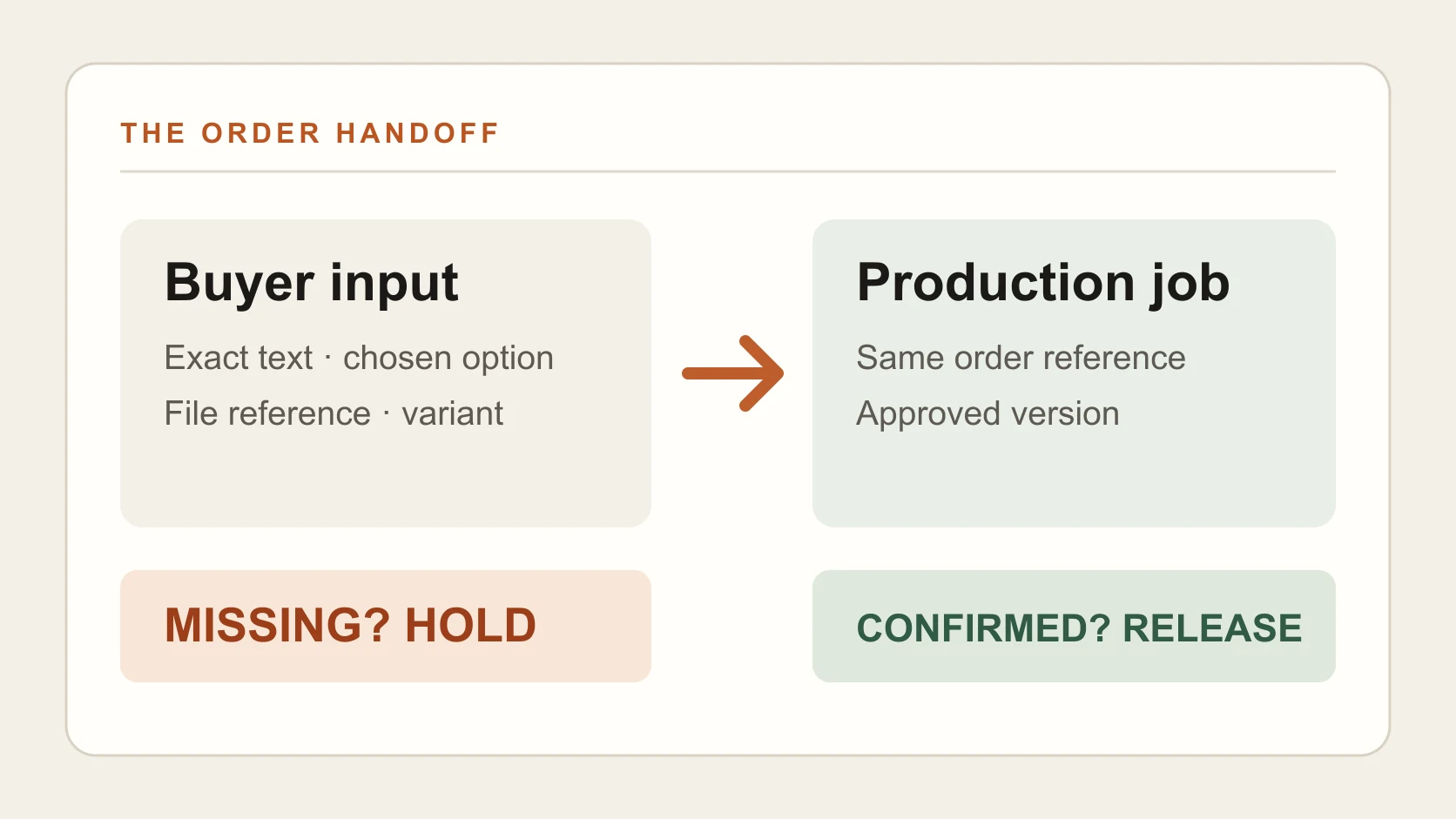
For personalised orders, establish what releases the job for production. Does the supplier need payment, the customer's exact text, a usable file or approval of a proof? Keep any missing input visible, because an estimate that starts after approval doesn't cover the wait for that approval.
Your own handoff belongs in the plan too. Shopify's fulfilment guidance identifies how quickly a dropshipper places the order with the supplier as something the seller controls. Record when the customer ordered and when the supplier received everything needed to start.
Before paying for a faster delivery service, ask which stage it shortens. Resolve an outstanding artwork approval or stock question separately; a different transit service doesn't answer it.
Use tracking to establish what happened
A tracking number alone doesn't establish that the carrier has the parcel. In UPS's tracking definitions, “Label Created” means shipment and billing details have been received. “Shipped/On the Way” means UPS has received the shipment and it is moving through its network.
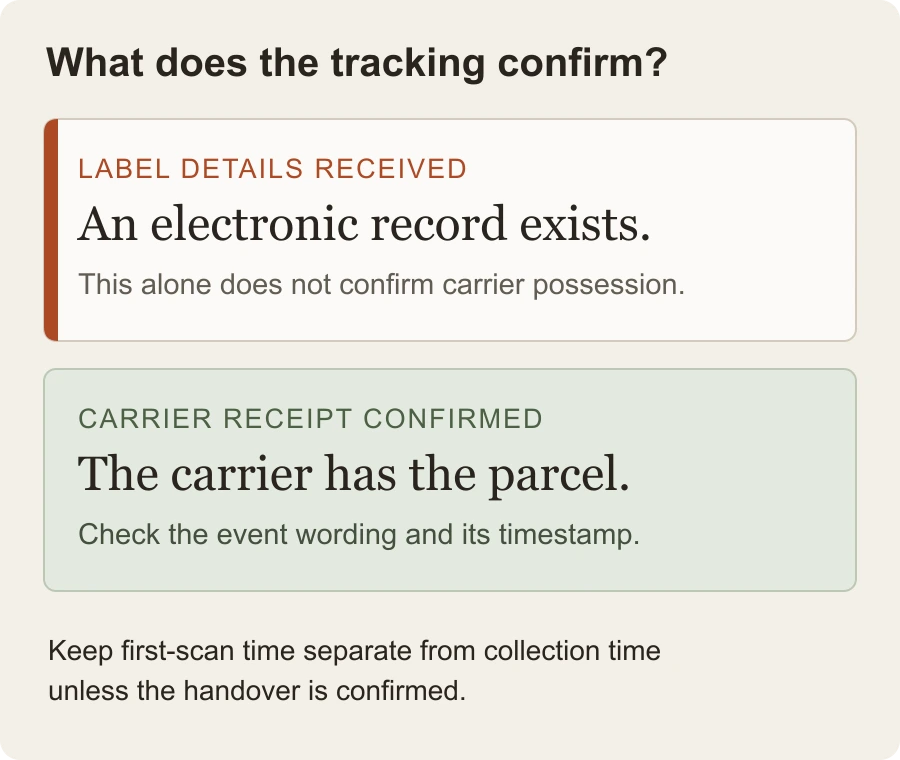
Ask which event confirms collection for the quoted service and where you can check it. If another carrier handles the final delivery, ask how its tracking reference connects to the original one.
Save the event wording and timestamp as shown. Keep a first-scan time labelled that way unless you also have confirmation of when the parcel was collected.
And a quiet tracking page doesn't prove the parcel has stopped. UPS says long-distance shipments may go without another scan until the destination hub. When something looks late, use the last confirmed event to ask the supplier or carrier for an update.
Keep the estimate and its evidence together
Use one record for each product, route and service you're considering. That keeps a quoted range separate from the result of an actual order.
Tick each detail once you have confirmed it. Copy the blank record to save your answers.
Keep the clarification with the supplier quote template, so the timing still refers to the product and delivery service being priced.
If the reply leaves gaps, send those specific questions back:
A range with missing conditions is still unresolved. If the supplier calls a service guaranteed, ask for the written terms and remedy before describing it that way to a customer.
Turn the reply into useful customer information
Use the confirmed preparation, origin and delivery-service details in your shop's settings. On Etsy, estimated delivery dates use processing time, carrier transit and historical information. Its setup guidance asks for the dispatch origin, shipping service and the time needed to prepare the order and hand it over.
So an Etsy seller needs a preparation estimate that covers the work actually required for that listing. Entering only the carrier's transit range would leave that work unaccounted for. For a Shopify store, keep fulfilment and transit time separate when configuring delivery dates too.
As orders arrive, compare what happened with the estimate for that same product, route and service. Keep delayed and unresolved orders in the record alongside delivered ones. A quick sample shipment to your address establishes what happened to that parcel, not a reliable range for every customer destination.
When a stage runs late, ask what changed and get the next action confirmed. Save the answer in the supplier order record, then update the affected customer's information using the confirmed facts. If the new arrival date is still unknown, say so.