White label usually means selling a supplier's existing product under your brand, while other businesses can brand the same product. Private label commonly involves a product made for your brand, with more control over its specification and potentially an exclusive arrangement. Shopify's comparison uses this distinction.
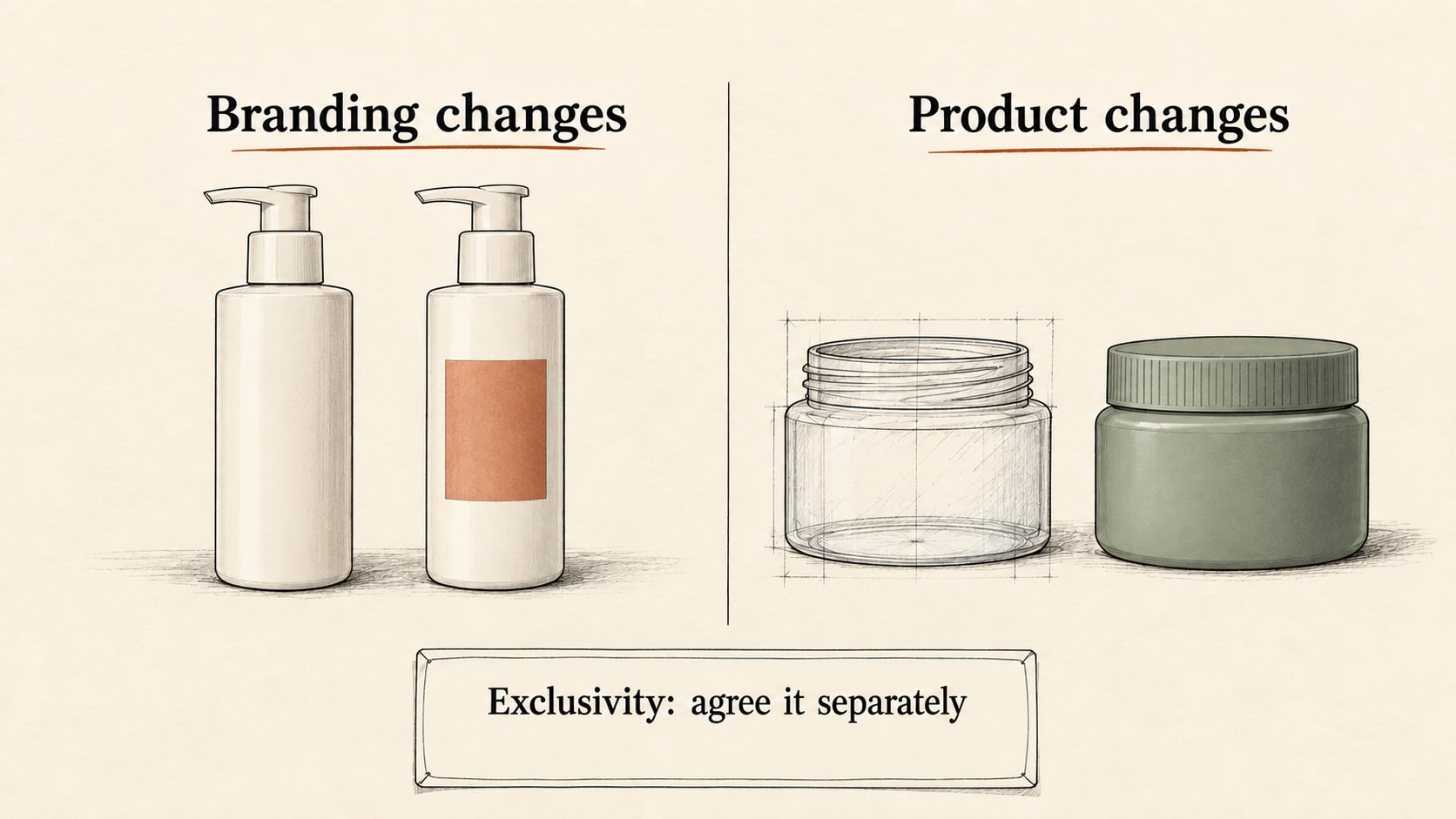
Suppliers don't always use the terms consistently. Start by describing what you want to change. Adding artwork, changing the product and reserving a version for your business each need a clear answer.
Describe the change before choosing the label
Write down what your current product is missing. If the catalogue version already meets your needs, ask for that exact item with your branding. If it needs a different material or feature, put that change into a specification the supplier can price.
| What you need | What to request | What to settle before ordering |
|---|---|---|
| Your branding on an existing product | Catalogue reference, artwork and application method | Position, finish and an accurate sample |
| A change to the product itself | A specification describing the required change | Feasibility, development work and sample approval |
| Branded packaging around an unchanged item | A separate packaging quote | Fit, print, packing work and stock commitment |
| A version reserved for your business | A written exclusivity proposal | Exactly what is reserved, where, for how long and on what terms |
Mark the requirements you can't compromise on. That gives you a useful way to judge alternatives when the supplier comes back with a different material, size or construction.
A reply saying “private label available” is an invitation to get specific. It doesn't tell you which of those jobs the quote includes.
Compare the first order and the reorder
The first order can include work that won't be repeated in the same way. Ask the supplier to identify development, samples, tooling, artwork setup and packaging separately from production.
Then ask which charges recur, which are credited against an order and what triggers another charge. Keep the conditions beside the amounts. A sample credit that only applies above a particular order quantity shouldn't disappear into your cost calculation.
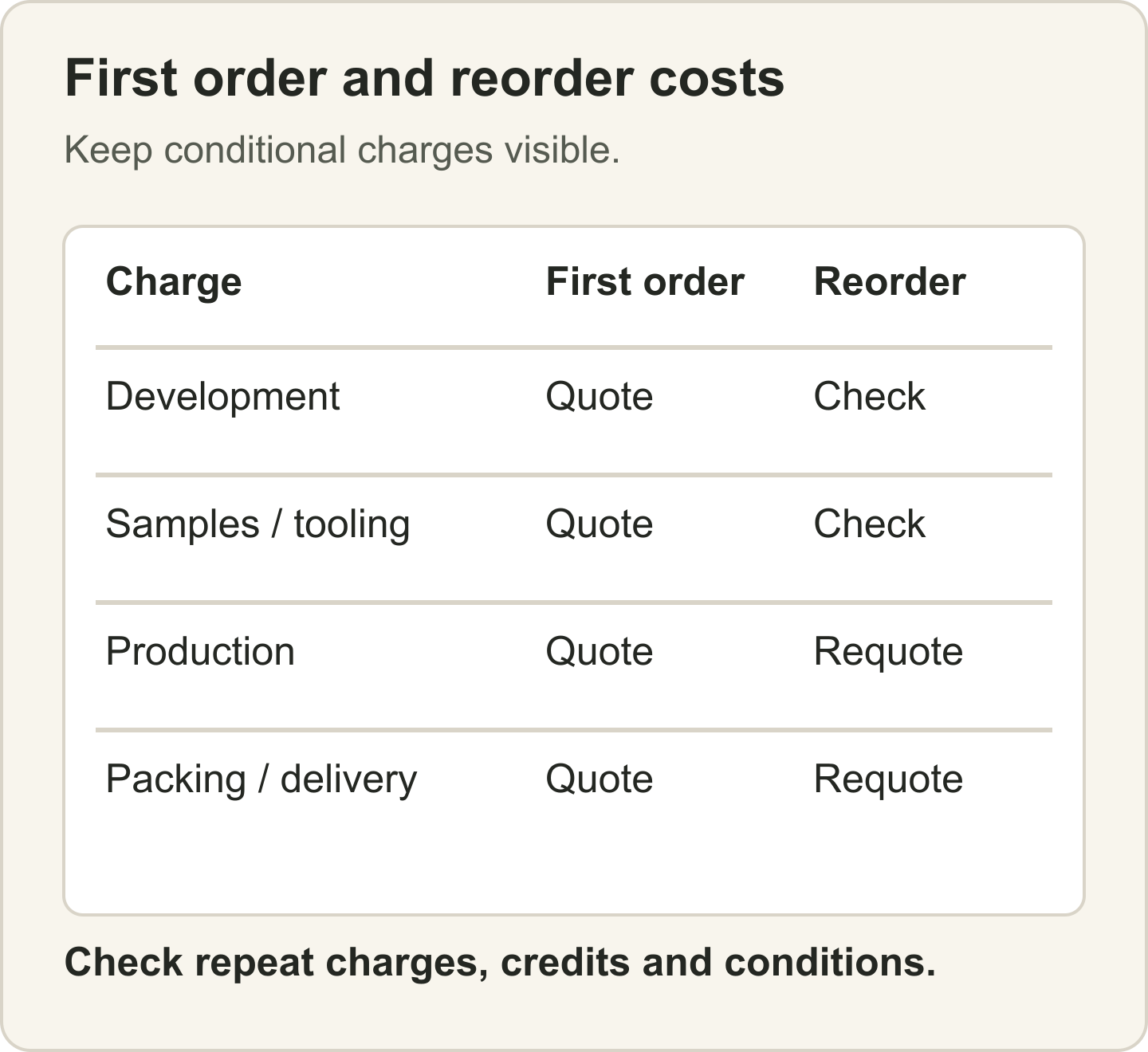
Compare the unchanged product and the proposed version using the same quantity and destination where possible. If the minimum changes, find out which part of the work causes it.
Timing needs the same treatment. Establish what needs designing, when a sample can be reviewed and which approval starts production. A delivery estimate for an existing item doesn't describe a product that's still being developed.
Use the requirement you started with to judge the extra work. If the change solves a real problem for your customer, keep it in the comparison. If you only need your artwork applied, get a clear quote for that job before adding development you haven't asked for.
Ask what exclusivity covers
Exclusivity needs a defined product and defined terms. Get the proposal in writing before making it part of your reason for choosing the supplier.
Ask which specification or feature would be reserved for you, whether the base product could still be sold with different branding, and which territories or sales channels the arrangement covers. Establish the duration and any order commitments needed to keep it in place.
Ownership is a separate question. For new artwork, drawings, formulas or tooling, agree who can use them and what happens if you change manufacturers. Don't infer the answer from who paid an invoice or which label appears on the quotation.
If your business depends on those rights, have the proposed terms reviewed by a lawyer familiar with the arrangement and relevant jurisdictions. You need the agreement to cover the restriction your business actually relies on.
Check how each customer's order will be made
Branding applied identically to every item is a different production task from a new customer name or image on each order. Be clear which one you're requesting.
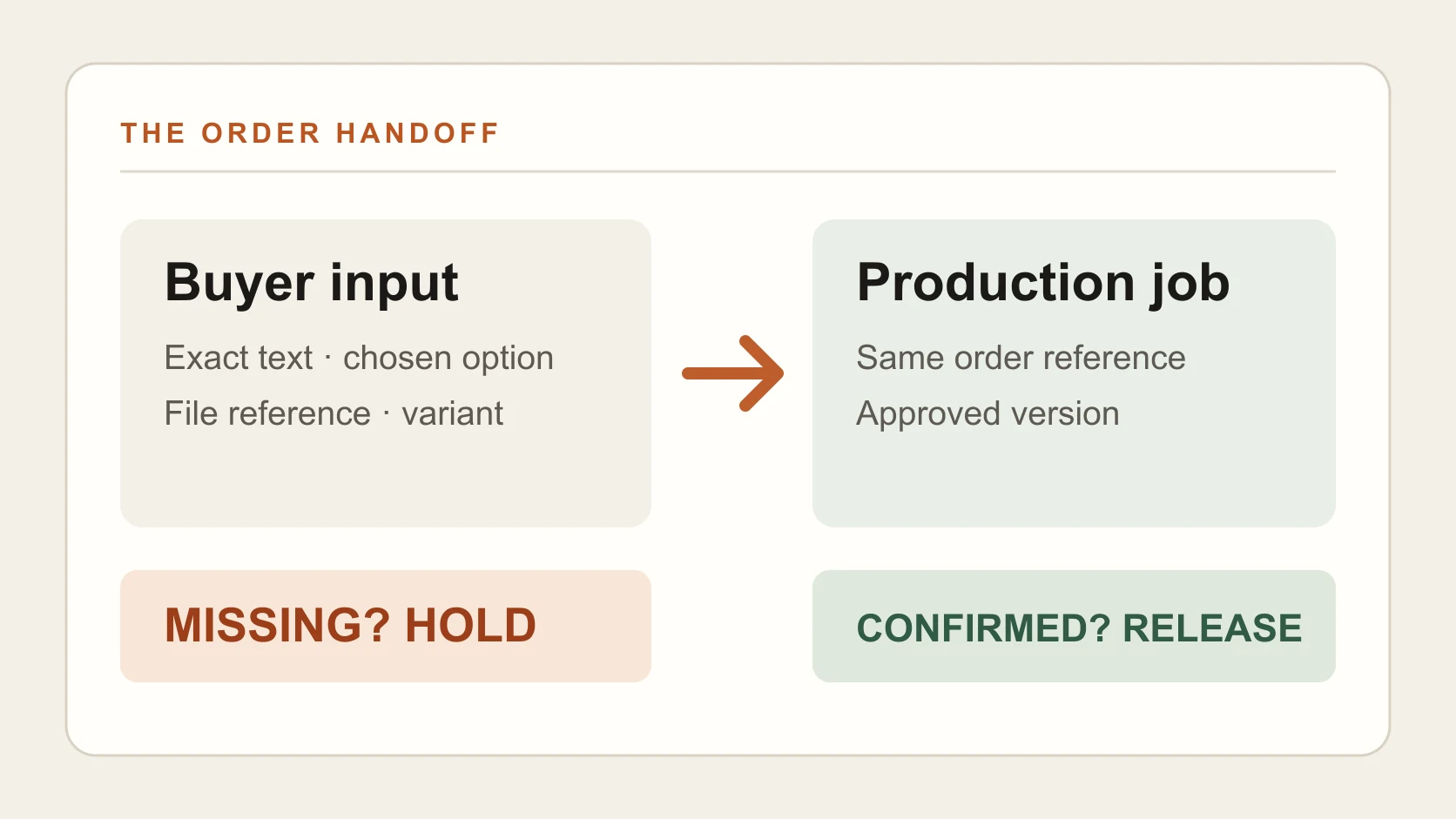
For individual personalisation, agree how the supplier receives the details, how you approve them and how the finished item is matched to its order. Find out which changes require a fresh proof or sample.
Then agree dispatch: a bulk delivery to you, stock held for later orders or individual customer parcels. Keep any inventory purchase separate from the cost of personalising and sending each order.
For an Etsy shop, review production-partner eligibility before buying stock. The supplier's description of its service doesn't settle which marketplace rules apply to your item.
Send the supplier the version you actually want
Use the product reference as the starting point. Replace the brackets and remove requests that don't apply.
When the reply arrives, match it back to the version you requested. Keep unresolved product changes or rights visible before you compare the total with another supplier's offer.