An Etsy production partner is an outside person or business that helps physically produce a qualifying item. The item must fit Etsy's rules, and the relevant listings need to disclose the production assistance. Etsy's partner guidance explains both requirements.
Work out how your product is made before filling in the form. You want a clear account of your contribution, the partner's work and where the order ships from. That makes the disclosure much easier to write accurately.
Start with the item you want to sell
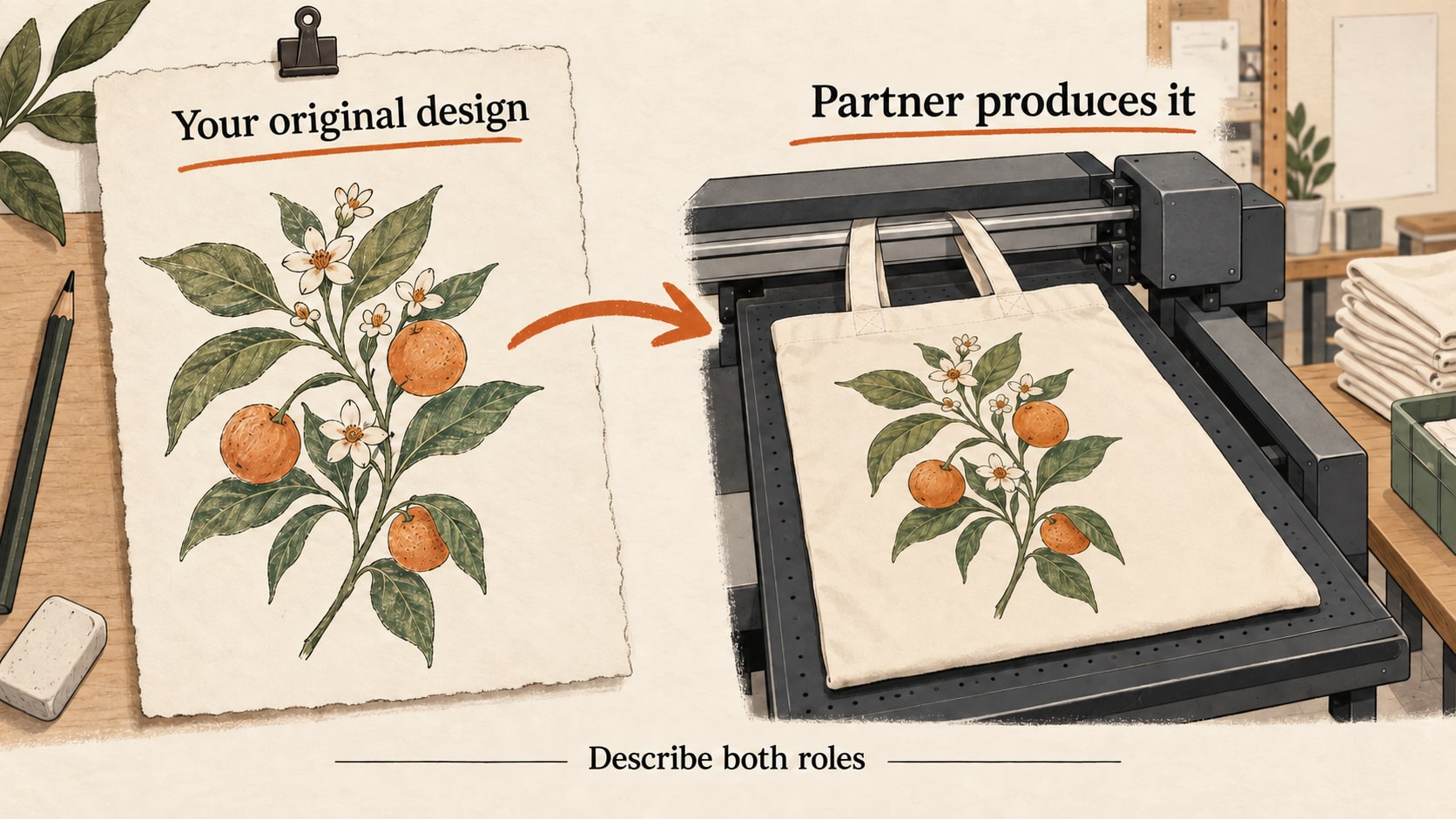
Etsy distinguishes original seller designs from products personalised with a buyer's unique text or image. Its Creativity Standards allow qualifying outside production under those routes. They don't give every branded catalogue product a route onto Etsy. Read Etsy's Creativity Standards.
| Your arrangement | What to establish |
|---|---|
| You create the original design and another business makes it | Identify your design and the production work carried out for you. |
| The buyer supplies unique text or an image that a partner applies | Identify the buyer's contribution and how it reaches the finished item. |
| You buy a ready-made product to resell | Check the specific reselling rules and exceptions before listing. |
| You buy materials and make the item yourself | A materials supplier isn't a production partner. |
Etsy gives a seller-designed colouring book printed and bound by a partner as an example of qualifying work. The seller creates the book; the printer produces it. That is a useful way to think about the division of work.
For buyer personalisation, a normal colour or size selection doesn't establish the unique-text-or-image route. If the catalogue says “customisable”, find out what that means for the item you're ordering.
Adding a partner record doesn't make ordinary reselling eligible. Check Etsy's reselling guidance when that is the arrangement you're considering.
Make the production arrangement clear
Your contact might coordinate the order while another business prints, sews or engraves the item. Find out who physically does the work. A helpful sourcing contact and a production partner can have different roles.
Keep a short record for each product. This is an internal worksheet for your shop, not an Etsy form you need to upload.
Tick each detail once you have confirmed it. Copy the blank record to save your answers.
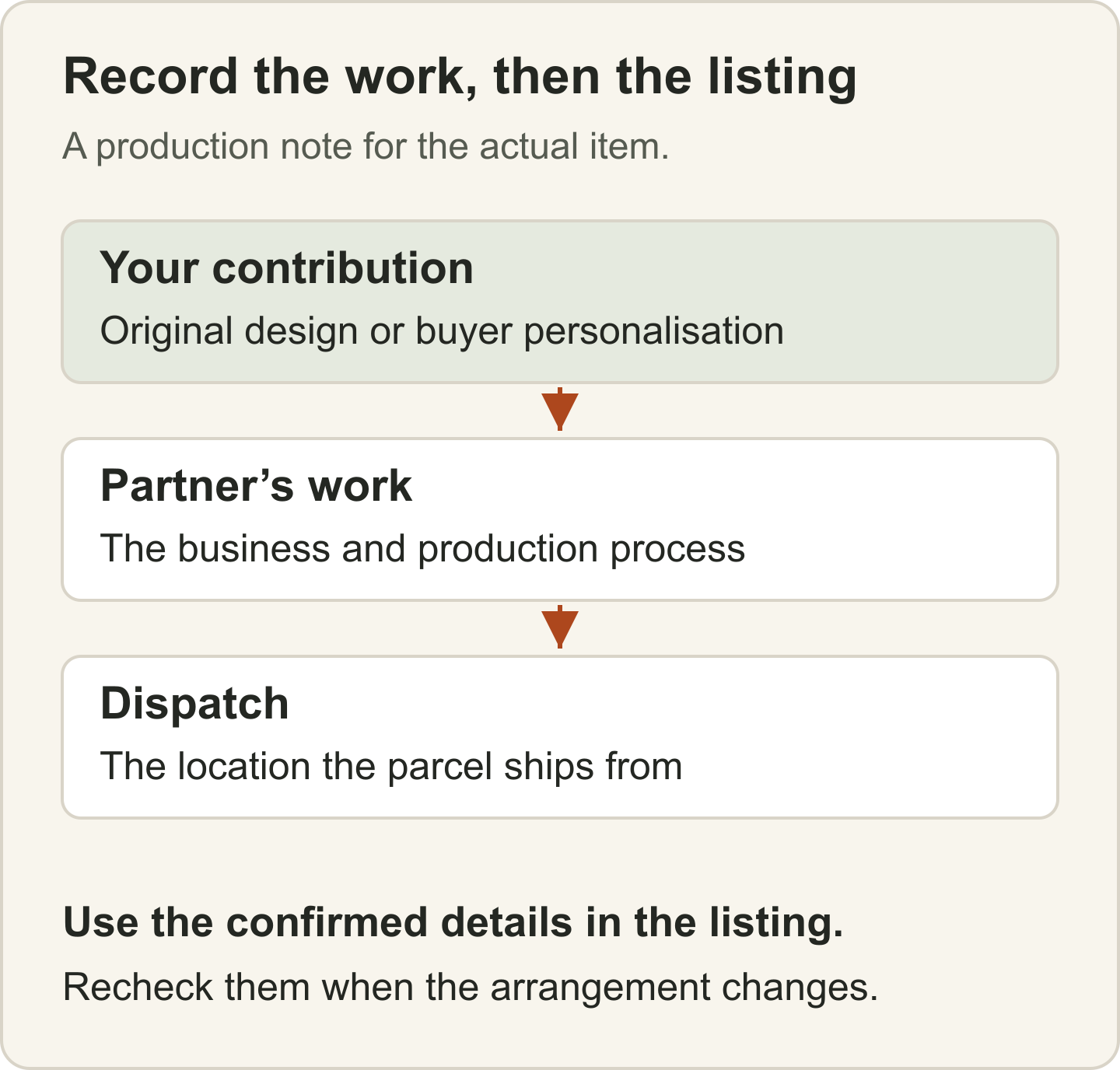
This record is also useful when something changes. If production moves to a different workshop, you can see which listing details need reviewing. If the product stays the same but the dispatch warehouse moves, you can update the shipping information without rewriting the design story.
Add the partner on Etsy.com
Etsy's current website steps are:
- Open Shop Manager → Settings → Partners you work with.
- Choose Add a new production partner.
- Enter the partner's details and location, and describe how you work together.
- Choose whether to show the business name or an accurate public descriptive title.
- Complete the partnership questions, preview and save the record. Associate it with the relevant listings.
You can also add a partner while editing a listing. New partner records currently need to be created on Etsy.com; Etsy says they then appear as options in the seller app. Follow Etsy's setup instructions if the interface changes.
Write the disclosure from the actual work
Explain what you contribute and what the partner does in ordinary language. A buyer should be able to understand the arrangement without knowing how manufacturing works.
Use your production record to answer these questions:
- What have I designed or prepared for this item?
- What physical production work happens outside my shop?
- Why am I using that service?
Keep the answer specific to the work you've confirmed. Don't describe factory visits, testing or inspections unless they happened. And don't imply that your team makes a product by hand when the partner manufactures it.
The dispatch location needs its own check. Your shop address doesn't tell a buyer where a partner-produced parcel starts its journey. Etsy requires accurate shipping-origin information; confirm the location for this product before copying settings from another listing.
Before the first order goes through
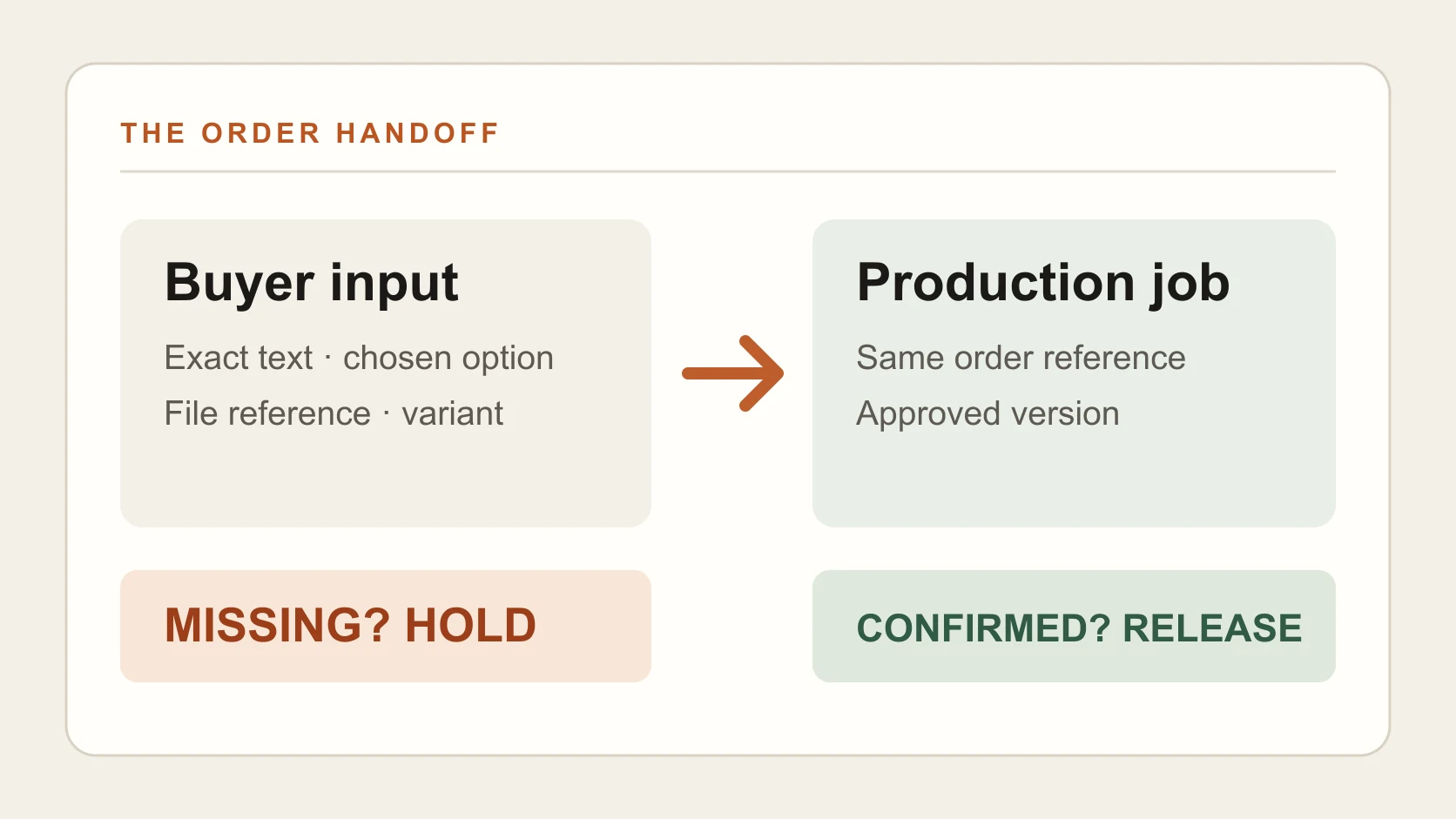
Now connect the disclosure to the actual order process. Agree how you send the design or personalisation, who approves it and what happens when the details are incomplete.
You remain responsible for your shop's commitments and resolving order issues with buyers. Etsy's Seller Policy sets out those responsibilities. Use the confirmed process to set your processing times, then check the first orders against it.