There is no single private supplier we can ethically recommend, but the trustworthy starting points for China wholesale home goods are Yiwu's Futian Market for decor and seasonal items, 1688.com for the lowest factory prices if you have a sourcing partner, Alibaba.com for English-supported B2B with escrow, and a coordinated warehouse model if you want one chat instead of five vendors. AliExpress, DHgate, and Temu are not wholesale, and confusing them with the platforms above costs new buyers thousands every year.
Most new buyers lose their first thousand dollars on the same mistake. They place an "order" on AliExpress thinking it is wholesale, get retail prices with retail margins, and wonder why their Etsy or Shopify store cannot compete. AliExpress is consumer dropship pricing in a B2B trench coat. The actual wholesale supply is somewhere else entirely.
You probably already know that "find me a supplier" is the question, but it is also the wrong question. A supplier reliable for ceramics is often unsuitable for textiles. The real question is where the trustworthy supply lives for your category, and how to verify it. This guide gives you a category-by-category map of where the real wholesale home goods supply is in China, the compliance traps Amazon and Etsy sellers actually pay for, the MOQ math by sub-category, and the decision framework for which sourcing pathway fits your stage.
Why "Recommend Me a Supplier" Is the Wrong Question
We get this email every week. Can you just send me a list of three good suppliers? The honest answer is no, and not because we are gatekeeping.
Suppliers shift. A factory that ran clean for a Shopify candle brand in 2024 can be a different operation in 2026 after a manager change or a capacity sell-off. The supplier reliable for stoneware mugs is rarely the right call for soft furnishings. And what works for a 200-unit Etsy test order is the wrong fit for a 5,000-unit Amazon launch.
What can be recommended honestly is where the trustworthy supply lives for a given category, how to verify a specific supplier inside that pool, and which pathway fits the order size you are actually planning. That is the article from here on.
Where Reliable Wholesale Home Goods Suppliers Actually Live
Five real B2B sources. The order matters; we have ranked them by accessibility for English-speaking operators.
Yiwu Market (the answer everyone forgets)
Yiwu Futian Market in Zhejiang province is the answer most "find a supplier" articles bury or skip. It is the largest wholesale commodity center on Earth: roughly 75,000 booths across five interconnected districts, more than 400,000 products, and an estimated $70 billion in annual trade volume according to Yiwu Commodity City Group's reporting.
For home goods specifically, Yiwu is where the supply concentrates. Christmas decorations, artificial flowers, candles, picture frames, vases, kitchenware, small furniture, soft furnishings, and seasonal decor all flow through Yiwu first. Industry estimates put Yiwu's share of global Christmas decoration manufacturing above 60 percent.
You do not have to fly there. Most serious operators work with a Yiwu-based sourcing agent who walks the market, negotiates in Mandarin, consolidates the order from multiple booths into one shipment, and handles export paperwork. Agent commissions typically run 5 to 10 percent of order value.
1688.com (the marketplace serious operators use)
1688 is Alibaba's domestic-facing platform, in Chinese, priced for the Chinese market. Prices run 30 to 60 percent below Alibaba.com for the same products. The catch is that 1688 listings are in Chinese, payment expects a Chinese bank account, and most sellers do not export directly.
If you have a Yiwu agent or a coordinated warehouse partner who reads Chinese, 1688 unlocks the real factory pricing. Without one, you cannot use it directly. Translate-and-pray with Google Lens is not a strategy at order volume.
Alibaba.com (the obvious starting point)
Alibaba is fine. It is where most operators start, and there is no shame in it. Filter for Verified Supplier and Trade Assurance, treat those as the floor not the ceiling, and price-check anything you find against 1688.
The trick on Alibaba: roughly 70 percent of "manufacturers" listed are actually trading companies. For home goods this is often a feature, not a bug. A trading company that consolidates ten booths in Yiwu into one container is doing real work. Verifying which one you have is part of the job (more on that in the verification section).
Made-in-China and Global Sources
Made-in-China.com and Global Sources skew toward larger, export-experienced suppliers. Catalog is smaller than Alibaba's but the average operator is more sophisticated. Useful for kitchenware and tabletop categories where you want a factory direct rather than a Yiwu booth.
Global Sources additionally runs trade fairs in Hong Kong (Lifestyle and Gifts shows in April and October) which are the cleanest in-person sourcing events for home goods if you can travel.
Sourcing agents and coordinated warehouses
The middle path between "DIY on Alibaba" and "fly to Yiwu quarterly" is a sourcing agent or a coordinated warehouse. An agent vets suppliers on your behalf, runs inspections, consolidates shipments. A coordinated warehouse like SupplierMafia goes further: vetted factory and Yiwu-booth relationships are already in place, and you communicate through one channel for every part of the order. Built specifically for Etsy sellers, Shopify stores, and dropshippers who do not want to project-manage five vendors.
A Quick Comparison: B2B Platforms at a Glance
| Platform | Typical MOQ | Language | Payment | Best For |
|---|---|---|---|---|
| Yiwu Market (in person or via agent) | 50–500 | Chinese | Cash, agent escrow | Decor, seasonal, candles, small homewares |
| 1688.com | 100–1,000 | Chinese only | Chinese bank account | Lowest factory prices, requires sourcing partner |
| Alibaba.com | 200–2,000 | English | Trade Assurance escrow | First orders, English support |
| Made-in-China | 500–5,000 | English | T/T or L/C | Larger factory orders, tabletop, kitchenware |
| Global Sources | 500–5,000 | English | T/T or L/C | Export-experienced manufacturers, trade-show buyers |
Want this whole chain handled? SupplierMafia coordinates the Yiwu booth-walking, the factory negotiation, and the consolidated shipment in one conversation. Start a chat →
The Confusion That Costs Beginners Money: B2C vs. B2B
This is the single most common mistake we see, so we are calling it out as its own section.
B2C platforms (retail, do not use for wholesale):
- AliExpress: dropship retail, single-unit pricing
- DHgate: small-batch retail with some bulk listings, but not real wholesale
- Temu: consumer marketplace, not B2B at all
B2B platforms (real wholesale):
- Alibaba.com (the.com matters; AliExpress is a different company-owned property)
- 1688.com
- Made-in-China.com
- Global Sources
- Yiwu Market
When a new dropshipper named Priya messaged us last year about her "AliExpress wholesale supplier" charging $4.20 a unit on a Bluetooth-free aroma diffuser, we ran the same SKU through 1688 in ten minutes. The factory price was $1.85. She was paying retail margin to a middleman who was buying from the same place she could have, with three weeks added to her shipping. She had been "wholesaling" for six months.
Sourcing by Sub-Category (Where the Real Supply Lives)
Home goods is not one category. The supply hub varies.
Kitchenware and tabletop
Factories cluster in Guangdong (Chaozhou for porcelain, Foshan for stainless) and Zhejiang. MOQs typically 500 to 2,000 units. Best on Alibaba and Made-in-China for direct-factory; Yiwu for trading-company consolidation.
Home decor (vases, frames, wall art)
Yiwu dominates. MOQs 100 to 500. Yiwu agents are the right pathway here, especially for mixed SKU orders.
Textiles, throws, and bedding
Shaoxing in Zhejiang is the world's largest textile market. For finished bedding products, 1688 with a sourcing partner is significantly cheaper than Alibaba. MOQs 300 to 1,000.
Candles and home fragrance
Mostly Yiwu and surrounding cities. MOQs surprisingly low: 200 to 500 units for private label, sometimes 100 if you accept the supplier's stock fragrance oils. Custom labels and packaging are standard at this volume.
Ceramics and glassware
Chaozhou for ceramics, Yiwu for glassware. MOQs 300 to 1,000. Watch lead-content compliance; covered below.
Storage and organization
Heavy Yiwu presence (storage baskets, organizers). For larger plastic storage, Guangzhou factories direct. MOQs 500 to 2,000.
Compliance Home Goods Sellers Skip and Pay For Later
Home goods compliance is lighter than electronics, but it is not zero. The settlements are real.
California Proposition 65
Prop 65 requires warning labels on products containing any of about 900 listed chemicals. For home goods, the common triggers are lead in ceramic glazes, cadmium in painted decor, and phthalates in plastic items. The California Office of Environmental Health Hazard Assessment maintains the official list.
Settlements for non-compliance regularly land in the $10,000 to $50,000 range, and the law has a private right of action which is why "Prop 65 bounty hunter" lawyers exist. If you sell in California, and most US e-commerce reaches California, this applies.
When Sarah, a Shopify home decor brand owner, imported 2,000 hand-painted stoneware mugs from a Yiwu trading company in late 2024, she did not request lead-content testing on the glaze. The settlement when a private enforcer flagged her listing was $34,000 plus the cost of relabeling remaining stock. The lead test would have cost $180 per SKU before shipping.
CPSIA (Consumer Product Safety Improvement Act)
If you sell anything intended for children under 12, CPSIA testing applies. Home goods that intersect: kids' bedding, decor for nurseries, toy-adjacent items. Testing costs $300 to $1,200 per SKU.
Formaldehyde and flammability in textiles
Many cheap textiles contain formaldehyde resins for wrinkle resistance. California (CARB) and federal rules apply. For bedding and upholstery, fire-retardant requirements vary by state. Ask your supplier for current test reports; most reputable factories have them.
Country-of-origin labeling
US Customs requires the country of origin marked on most imported goods. "Made in China" must be visible to the end consumer, not buried inside packaging. This is a frequent reason small importers get held at customs.
How to Verify a Home Goods Supplier in 2026
The verification process is largely shared with our China electronics supplier guide, so we will keep this section tight and call out what is different for home goods.
- Validate the business license on gsxt.gov.cn (the unified Chinese business registry).
- Run a third-party factory audit through SGS, QIMA, or AsiaInspection. Standard cost $400 to $1,200.
- Order paid samples and test the actual physical units, not photos. For ceramics specifically, test the glaze for lead. For textiles, test for formaldehyde.
- Run a pre-shipment inspection (PSI) before wiring the balance. AQL 1.5 for major defects, AQL 2.5 for minor, is standard for home goods. Cost $300 to $500.
- Pay 30 percent deposit, 70 percent on bill of lading copy. Use Trade Assurance on Alibaba for first orders under $20,000. Never wire to a personal bank account.
The home-goods-specific add: ask if the supplier has shipped to Amazon FBA before. FBA's packaging requirements (polybags, suffocation warnings, FNSKU labels) kill bad suppliers before customs does. A supplier that has done FBA prep will say so without prompting.
MOQ and Container Math: The Unit Economics Operators Get Wrong
Home goods are bulky and light. The unit economics break differently than electronics, and most "China sourcing" articles never mention this.
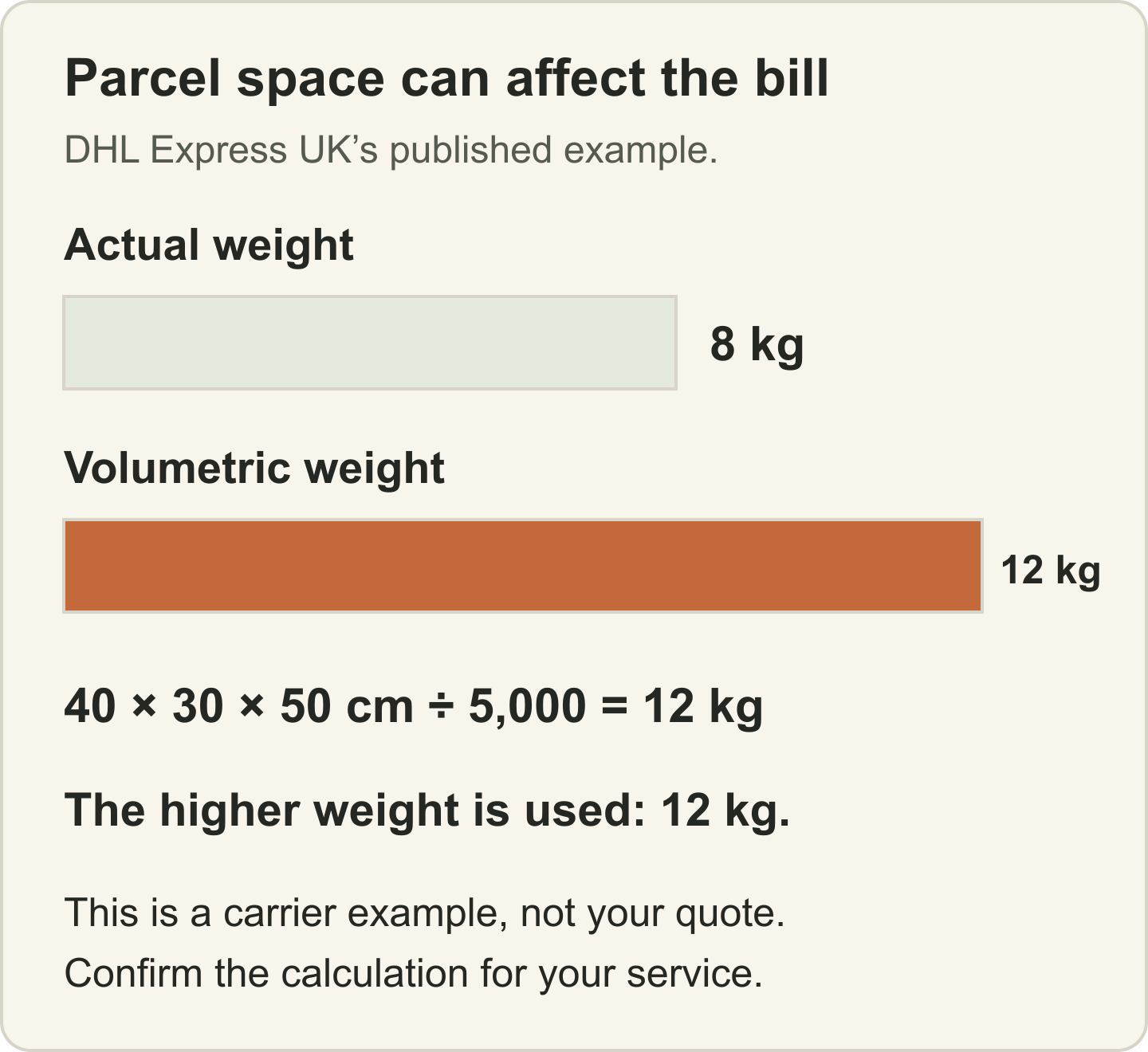
A 40-foot container holds about 67 cubic meters of cargo. Decor and candles fill that volume long before they hit the weight limit. So the question is not "how many units can I afford to buy?" but "how many cubic meters can I afford to ship?"
Less-than-Container Load (LCL) makes sense up to roughly 12 to 15 cubic meters. Above that, Full Container Load (FCL) is cheaper per unit. For a typical home goods order, this break-even hits around 1,500 to 3,000 small decor units depending on packaging.
Practical implication: MOQs that look high in unit terms often look fine in cubic-meter terms, and vice versa. A 5,000-unit candle order ships in maybe 8 cubic meters; a 500-unit large vase order can ship in 12.
Choosing Your Sourcing Pathway: A Decision Framework
| Stage | Recommended pathway | Why |
|---|---|---|
| First test order, under $5,000 | Alibaba Trade Assurance + paid PSI | Risk is contained, escrow works, learning is fast |
| Repeat orders, single category, $5K–$50K | Yiwu agent or coordinated warehouse | Booth-level pricing, consolidation, English coordination |
| Multiple SKUs per order with custom packaging | Coordinated warehouse model | One conversation handles five vendors at once |
| Single high-volume SKU, $50K+ monthly | Direct factory relationship (Made-in-China, Global Sources) | Your scale earns priority and direct factory pricing |
When Mike, a candle brand operator on Etsy and Shopify, was placing 2,000-unit orders every six weeks with three different Alibaba sellers (candle, jar, gift box), he switched to a coordinated warehouse model in 2025. The same order volume now goes through one conversation. Lead time dropped from 9 weeks to 6 because consolidation and inspection happen in parallel rather than serially. Cost per unit dropped about 14 percent because the warehouse buys candles direct from a Yiwu factory instead of through an Alibaba trading company.
Frequently Asked Questions
What is the minimum order to import home goods from China?
Realistically, 100 to 500 units depending on category. Candles and decor can start around 100 to 200 units with a Yiwu agent. Ceramics and bedding usually start at 300 to 1,000. Below 100 units you are paying retail-adjacent margins, even on B2B platforms.
Is Alibaba safe for buying home goods?
Yes, with two precautions. Use Trade Assurance for any order under $20,000 (escrow protects you until you confirm delivery), and pay for a pre-shipment inspection. Most Alibaba "horror stories" are from buyers who skipped one or both.
What is the difference between Alibaba and 1688?
Alibaba.com is the international B2B platform, in English, with Trade Assurance escrow and English-speaking support. 1688.com is Alibaba's domestic Chinese platform, in Chinese only, priced 30 to 60 percent lower for the same products. Most listings on Alibaba are also on 1688 at lower prices, with the Alibaba seller acting as middleman.
Should I visit Yiwu Market in person?
Not for first orders. Once you are spending more than $50,000 a year on home goods sourcing, the trip pays for itself in supplier relationships and price discovery. Until then, a Yiwu agent or coordinated warehouse covers most of the value.
How do I avoid Prop 65 issues with imported home goods?
Test before you import, not after. For ceramics, request lead-content testing on glazes ($150 to $250 per SKU at SGS or Bureau Veritas). For textiles, request formaldehyde and AZO dye testing. Apply Prop 65 warning labels by default if you sell to California; they are cheap insurance.
How long does it take to get the first shipment?
Eight to twelve weeks from first supplier contact to delivered inventory, on a typical order. That includes supplier outreach (1 to 2 weeks), sample order (2 to 3 weeks), production (3 to 5 weeks), and ocean freight to a US port (3 to 5 weeks). Air freight cuts the last leg to 5 to 10 days but multiplies the per-unit cost.
The Bottom Line
There is no single "best" private supplier in China for wholesale home goods, and anyone who tells you otherwise is selling you a listicle. There are best pathways for your category, your stage, and your order size.
For first orders, Alibaba Trade Assurance and a paid pre-shipment inspection get you started safely. For repeat orders or multi-SKU launches, a Yiwu agent or coordinated warehouse model produces better unit economics and far less project management. For scale, direct factory relationships in Guangdong, Zhejiang, or Fujian unlock the real pricing. AliExpress, DHgate, and Temu are not on this list because they are not wholesale, no matter how the marketing reads.
If you are an Etsy seller, Shopify operator, or dropshipper scaling beyond first orders and you do not want to vet five vendors yourself, start a chat with SupplierMafia →. One conversation handles the Yiwu booth-walking, the factory coordination, the custom packaging, and the consolidated shipping. Built specifically for operators who would rather spend their time on growth than on translating Chinese contracts at midnight.